
Northeast Corner
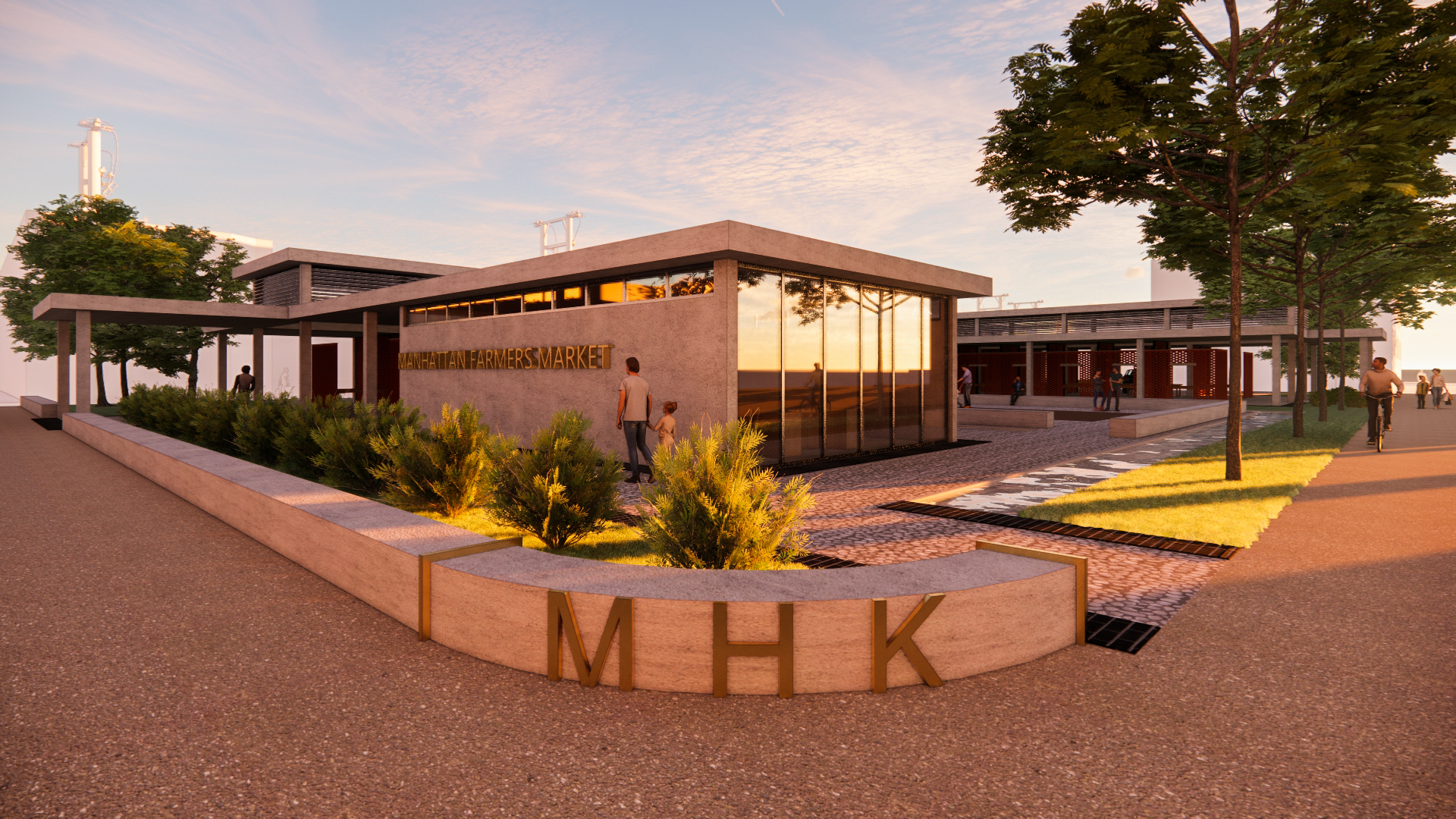
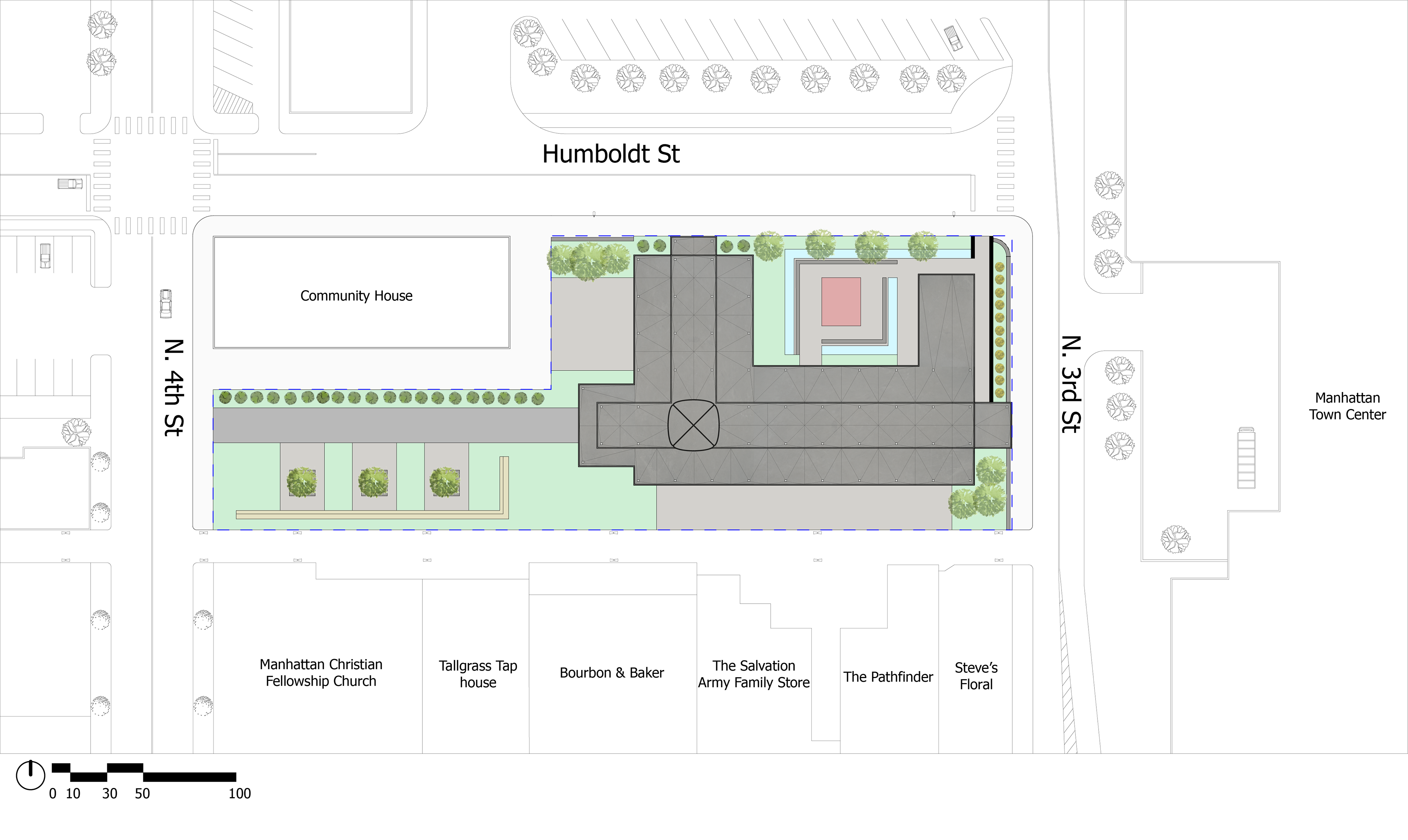
The main design goal of the 3-week project is to create a unique cultural epicenter for the Manhattan community. A special gathering space for all is the desired use of the farmers market as well as other variety of uses such as a movie night and surrounding landscape seating environments. The main idea of the gathering space came from the precedent research for the Gramalote Market Square. A lot of the inspiration for the design came from this market in Gramalote, Colombia. The Gramalote Market Square is set in a very unique context in a small town in Colombia that was mostly destroyed by a landslide caused by the “La Nina” phenomenon. With the town destroyed, the townspeople wanted to rebuild back stronger and used the Gramalote Market Square as the nucleus of the town. The main design elements that stuck out to really develop the sense of cultural identity were the multitude of entry points as well as many spaces to allow people to gather and interact with each other. The material palette was also influential as the brick partitions with the openings would allow natural ventilation into the market, which was a beneficial material use to have. The brick also reflects the community house, which most influences the building site. The concrete column and roof structure, as well as the rain collection aspect, were also influential in the design.
Parti Diagram
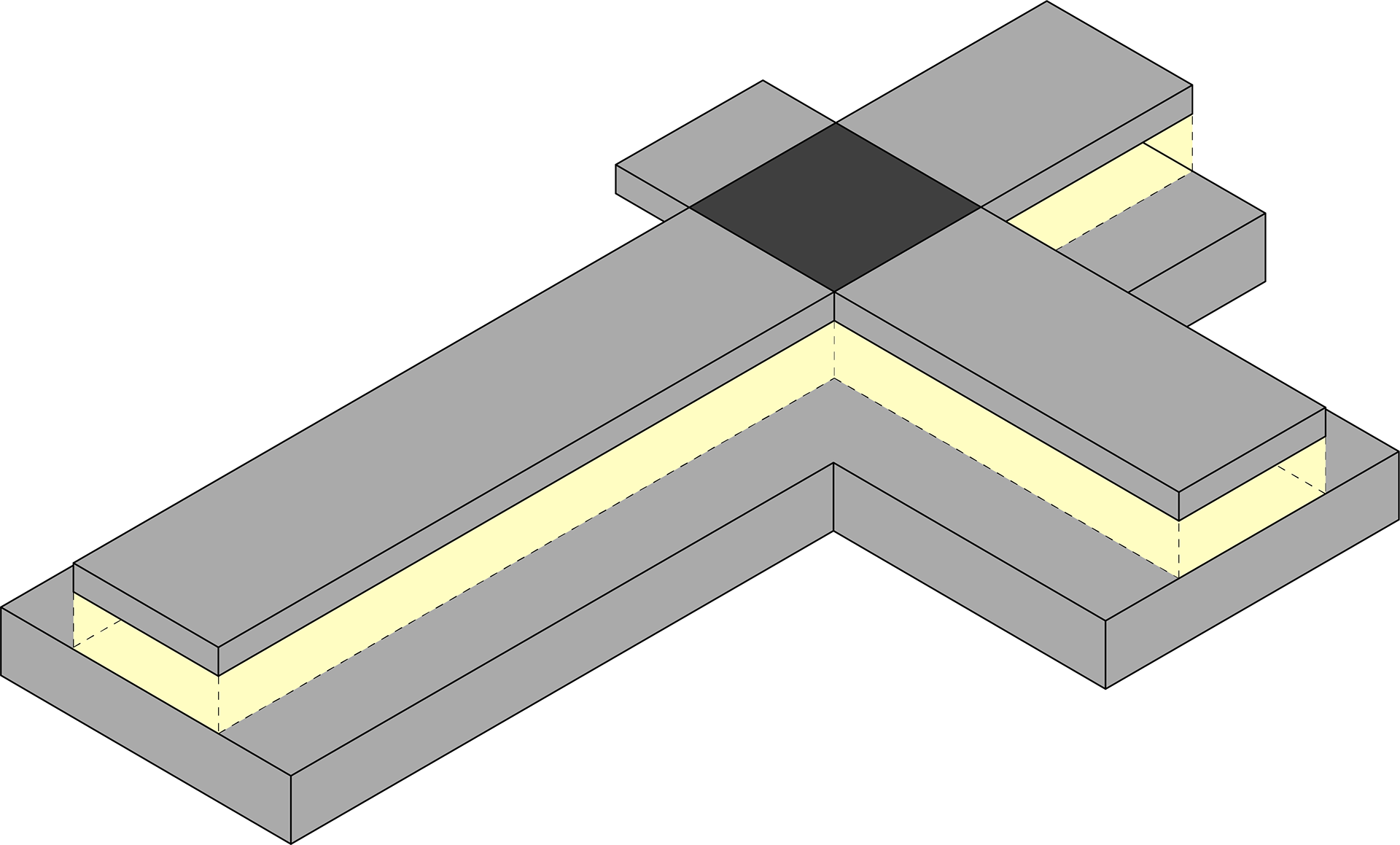
Two Rectilinear forms intersect to emphasize the intersection point. The design's intention is to spread and branch out to welcome all visitors from the north, west, and east. Lastly, the central area is dissected to allow for the negative space created to be filled with natural light that can illuminate the main aisle while still offering protection from the elements.
Intersection of Forms
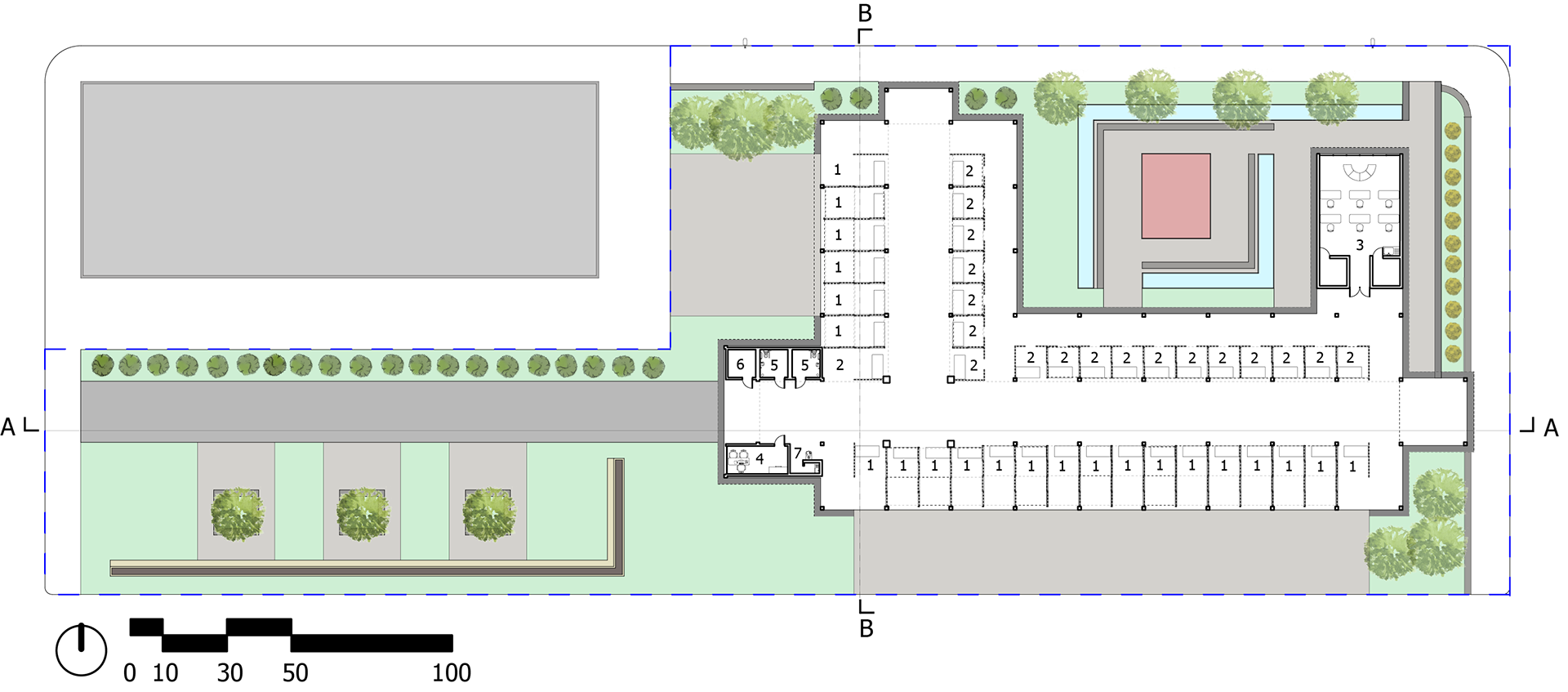
Key
1. Stalls with Vehicular Access
2. Stalls without Vehicular Access
3. Teaching Kitchen
4. Office
5. Unisex Bathrooms
6. Janitor's Closet
7. Water Access
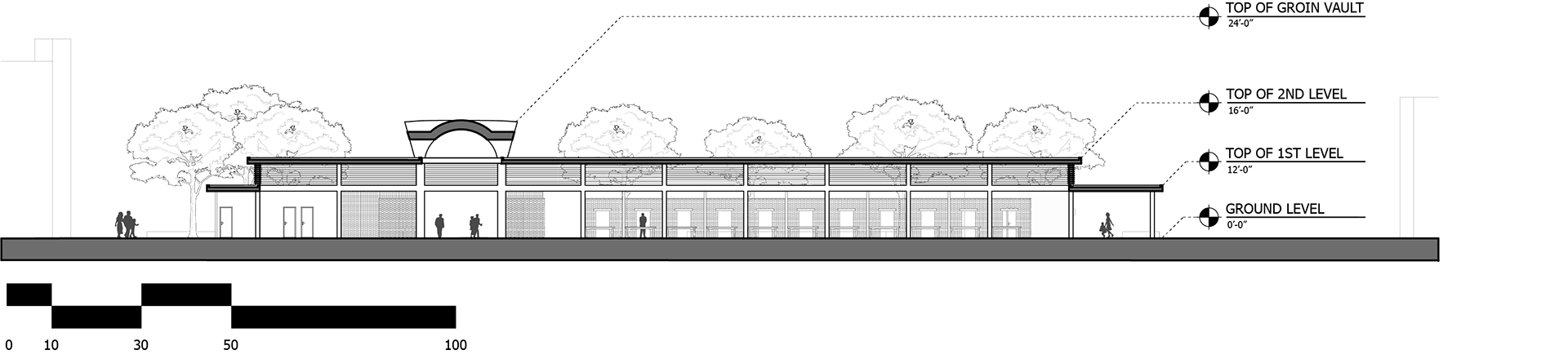
Section AA
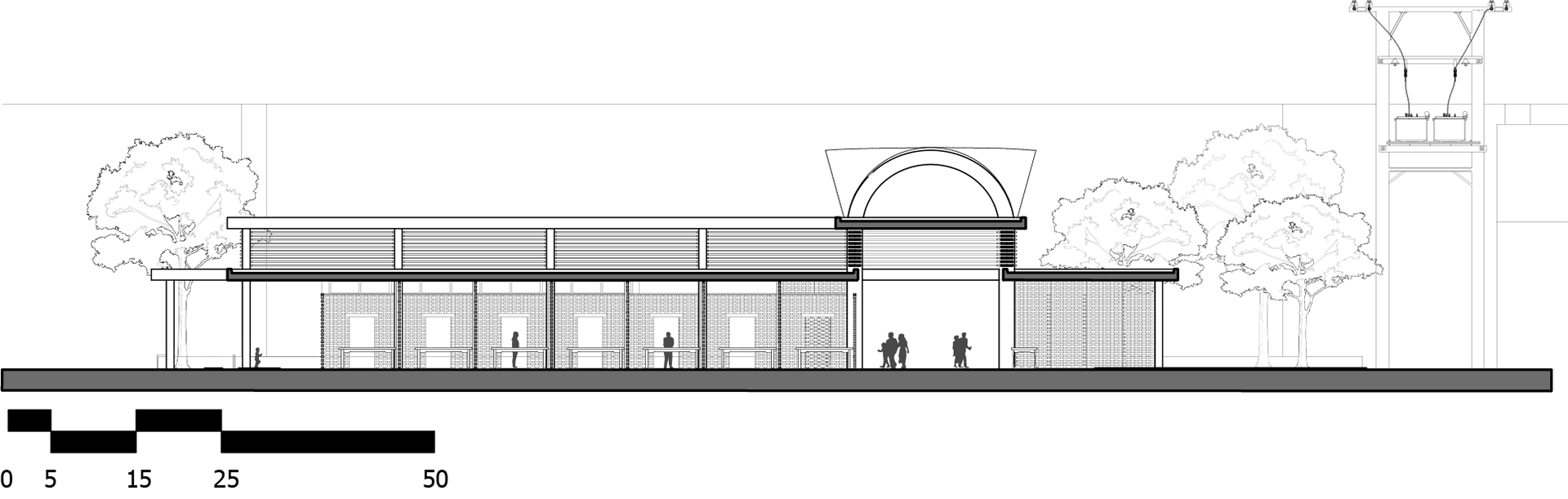
Section BB
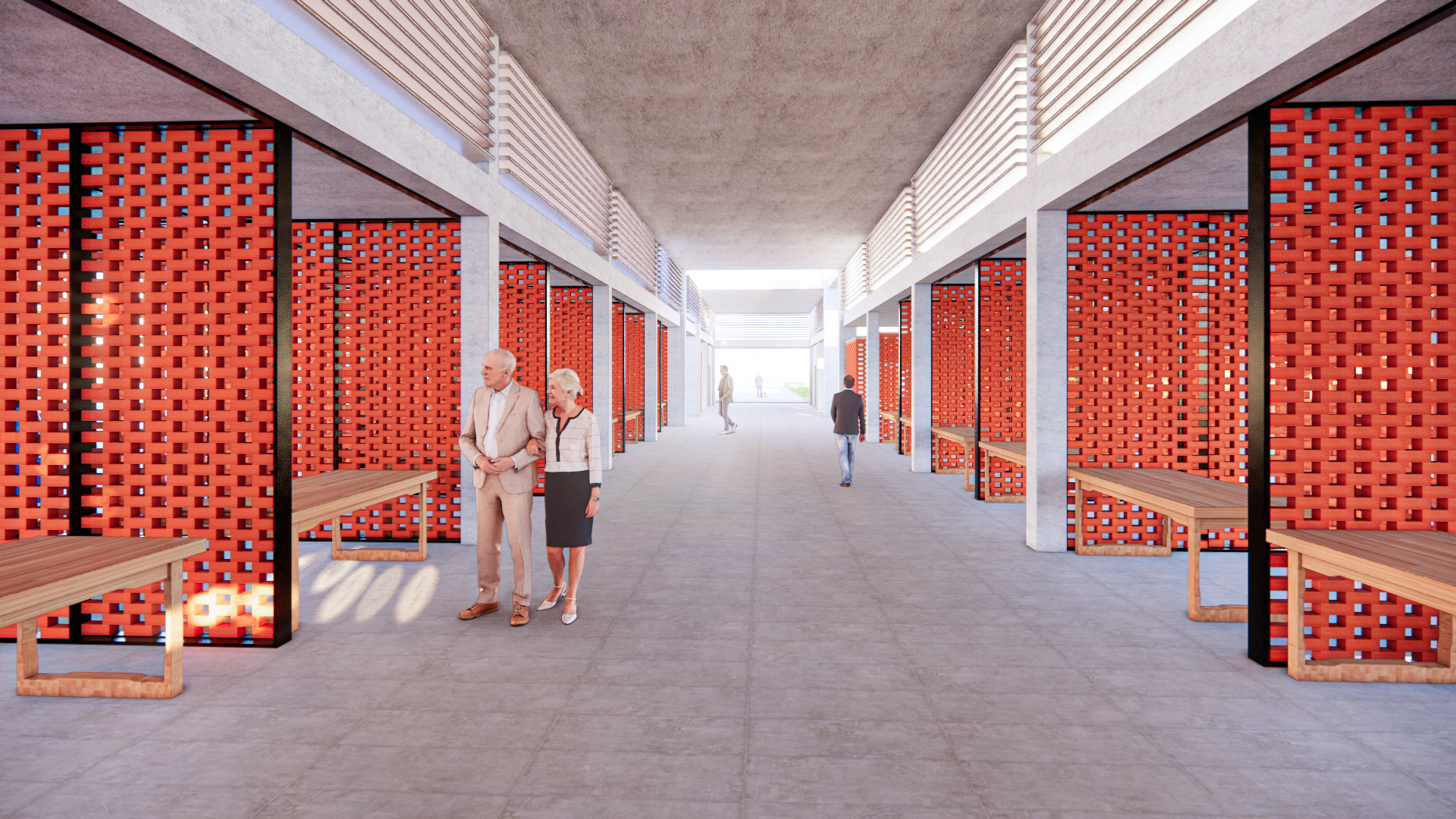
Render of Main Aisle
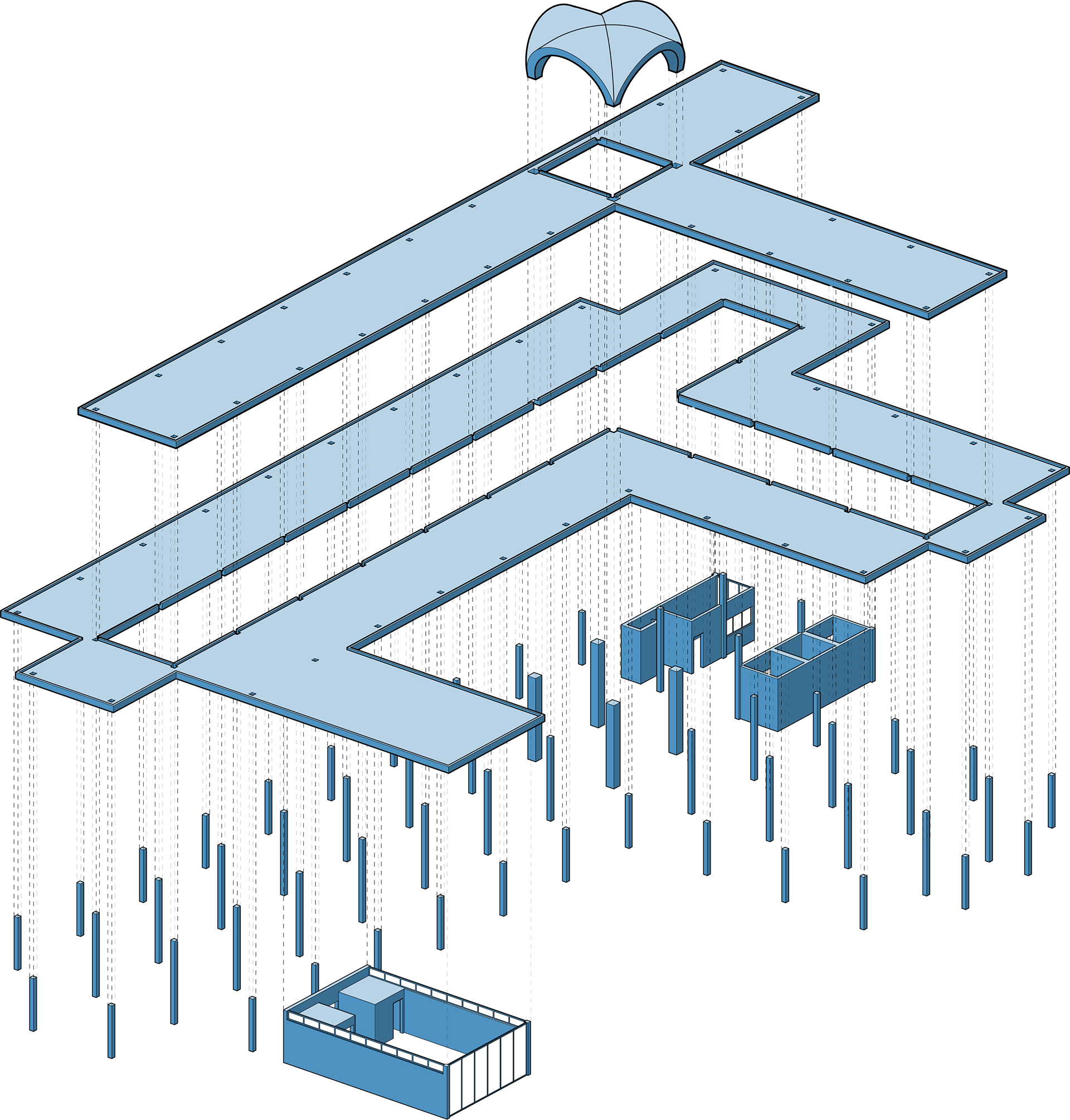
Exploded Axonometric of Structure
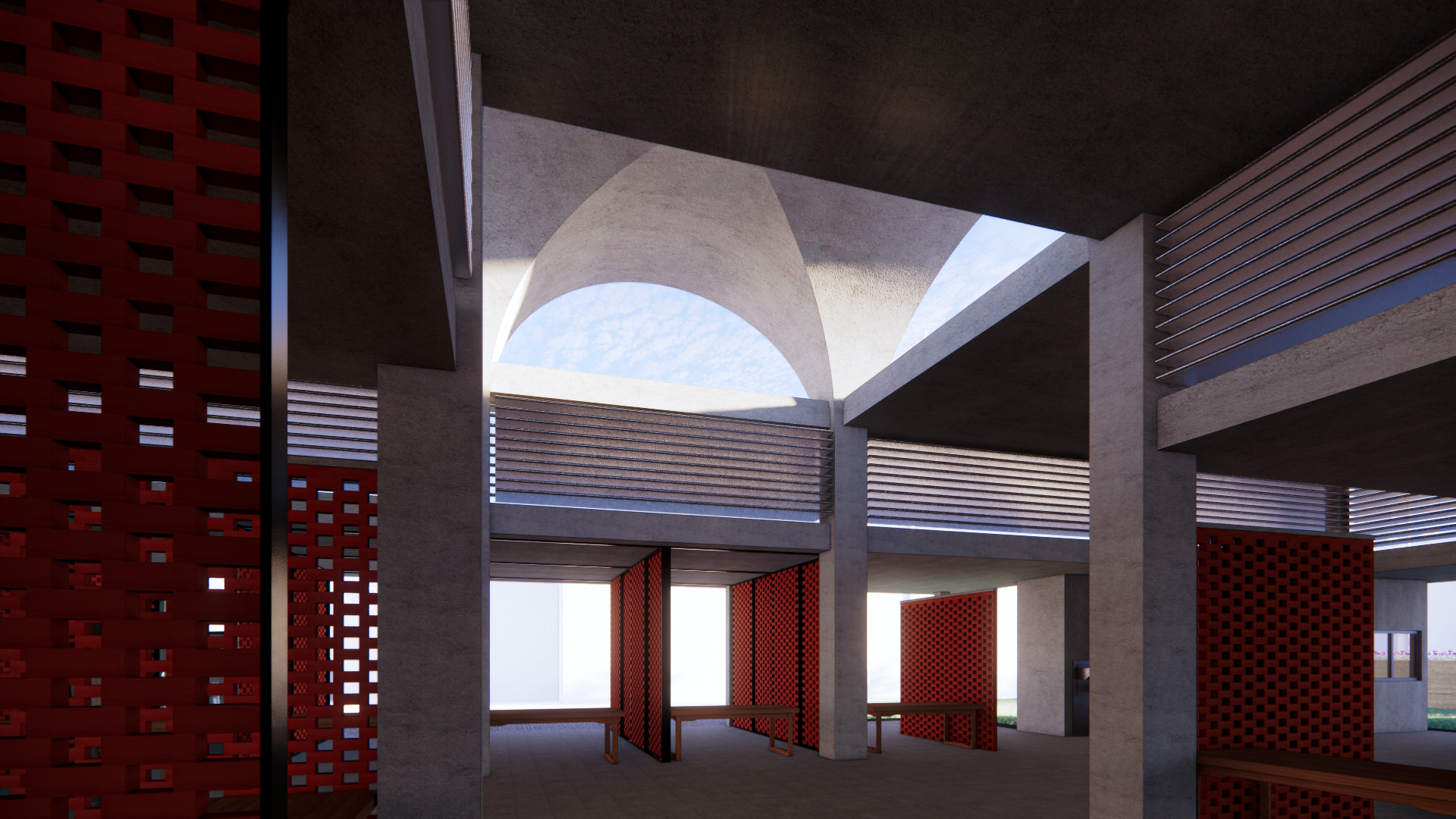
The structural system used for the Manhattan Farmer's Market is solely reinforced concrete. The reinforced concrete columns are supported by concrete pile foundations, then three layers of concrete create the overhead elements. The structure is set up on a 20ft x 20ft grid and consists of two rectilinear forms that intersect and at that point of intersection, a groin vault is extended up and out to emphasize the interaction of the two forms. The groin vault's furthest exterior surfaces have been extended 15 degrees more to block rain, but allow more sunlight and natural ventilation into the space of the intersection. The mass of the rectilinear forms is cut out centrally to allow more natural light to come in and fill the space. The negative space created by the dissection is filled with horizontal aluminum louvers to offer sun shading as well as block any rain. The overhead element of the pavilion is also replicated in the seating ad water elements. The columns also act as rain collectors, to reuse the water to maintain the water elements already on site.
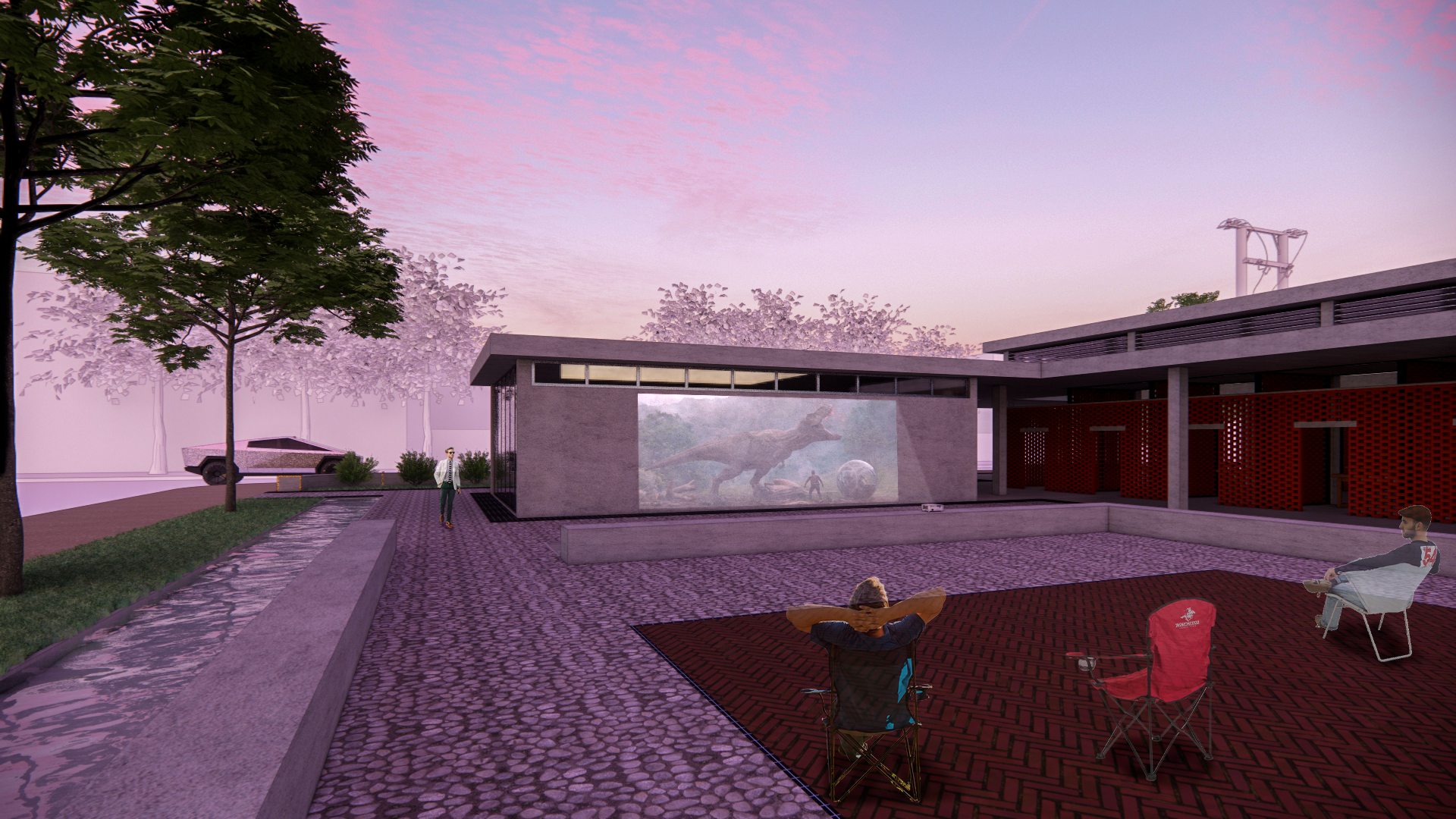
Multi-Use Diagram (Manhattan Movie Night)
To create a cultural epicenter downtown, there needed to be places where people can gather and interact with others. The landscape elements are all intended to create spaces outside
where people will want to meet even when the farmer's market may not be in use.
where people will want to meet even when the farmer's market may not be in use.
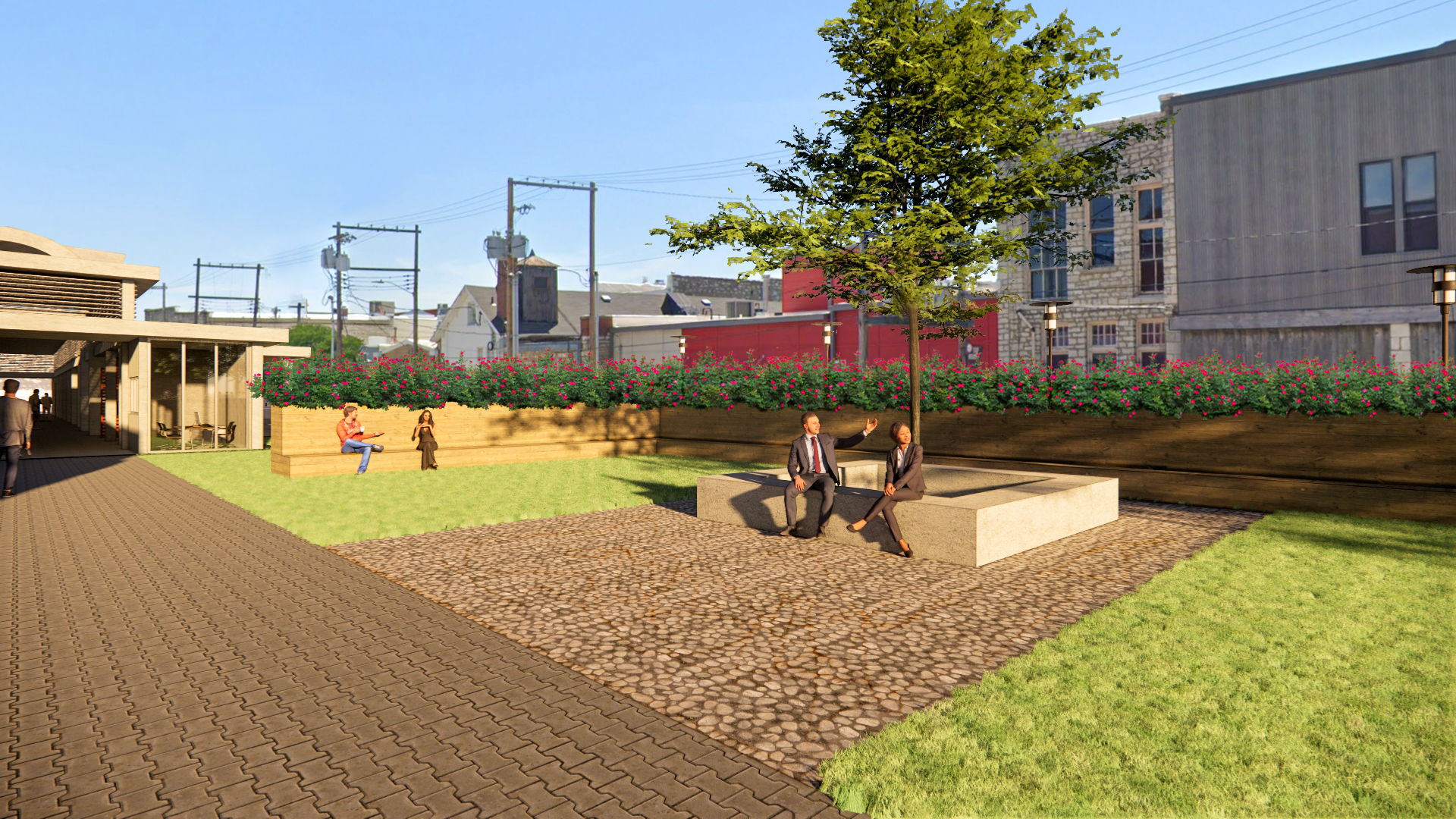
West Side Exterior Area
The design's goal to serve as a cultural icon is sustained for extended use due to the design's focus on environmental strategies with sustainability in mind. First, the concrete columns act as rain collectors. The rain-collecting columns also reuse the water and funnel it back into the water elements on the site. The introduction of the horizontal louvers breaks up the harsh light while still allowing the natural light in. The use of permeable pavement is also found in a major part of the landscape elements on the site. A permeable stone pathway is consistent in the main open gathering space on the site to allow for proper water collection as well as breaking up the stiff ground. The brick partitions were important in allowing for a sense of enclosure for each stall area while still not fully enclosing it. The openings allow for natural ventilation to come in and cool the stalls and main aisles. The landscape is also supplemented by the inclusion of native plants in Kansas specifically. The inclusion of viburnum shrubs and Linden trees helps the landscape, as well as helps, create a cultural icon for the local community.