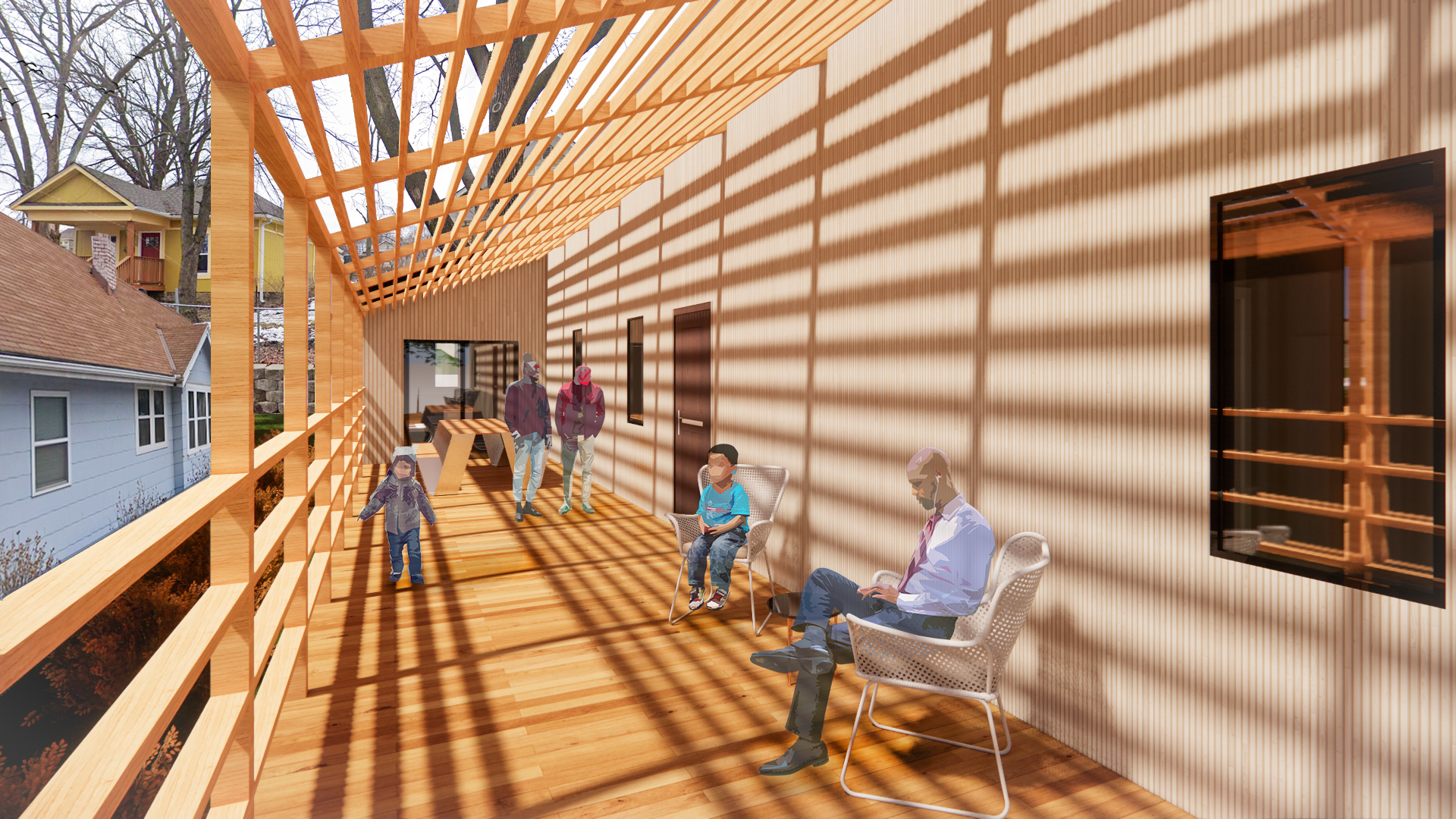

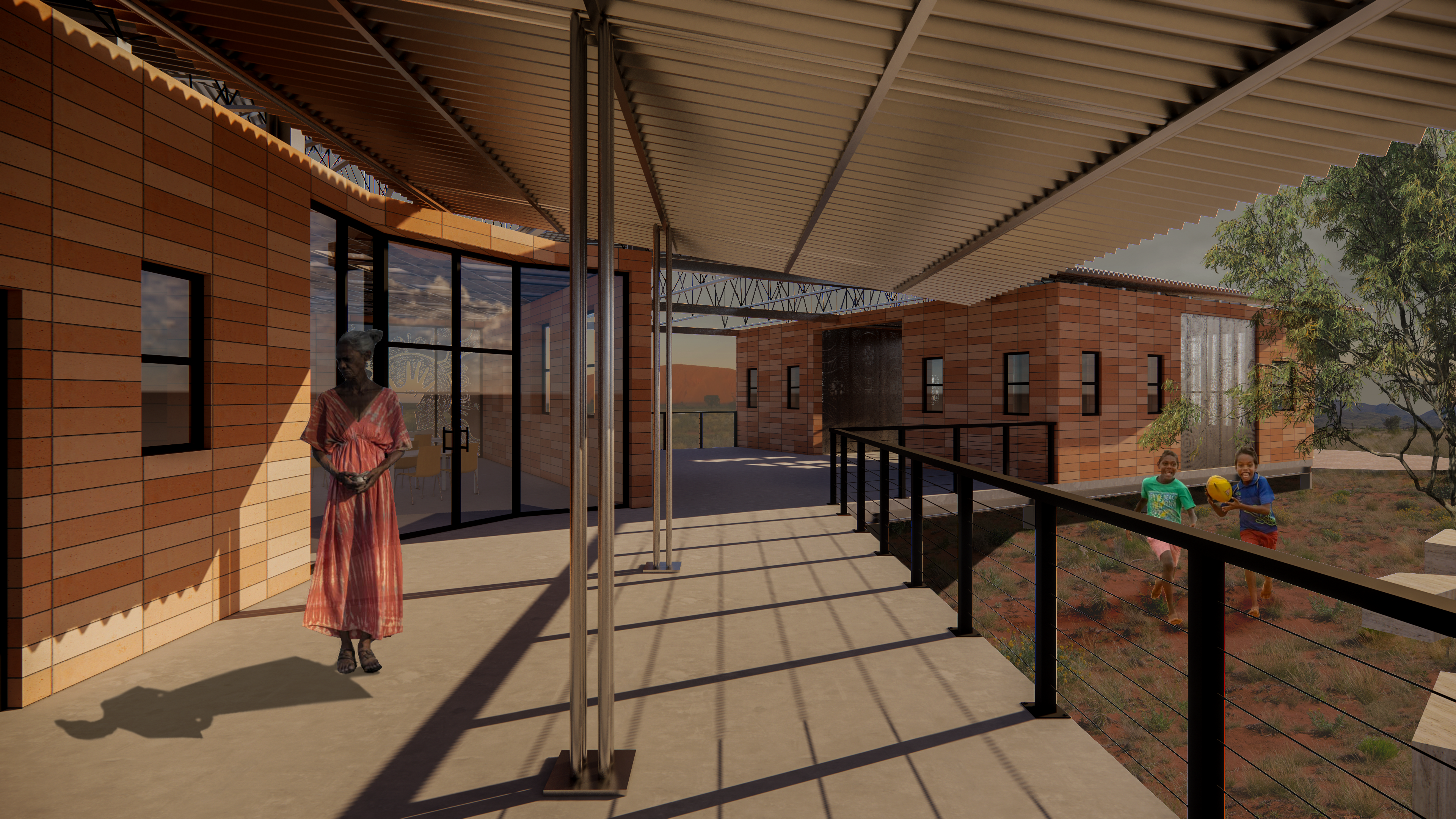
Main Exterior Space
Project Discription
The Looma Land Magistrate's Court and Community Space is a unique project that is located in the remote part of northwestern Australia called the Kimberley. The Kimberley is in the northwest region of Australia with a delicate and complex history directly under the surface of powerful, remote, and extreme geography. It was one of the earliest settled parts of Australia, going back 40,000-65,000 years, and it covers an area roughly the size of California with a population of fewer than 35,000 people. Pastoralism in the Kimberley brought English cattle ranchers to the area and it has become an integral and successful industry (there are more cows than people). Still, the history of settlement in the area is fraught with stories of displacement, resistance, corruption, and exploitation. It is not a “black and white” story either, but land ownership is still contested, controversial, and ongoing. The Kimberley Land Council has become the peak Indigenous body in the region that works with Aboriginal people to secure the native title and to provide a voice for land management in the area. The program for the site is a land court to settle disputes involving land rights, code/zoning violations, and other property disputes. It is intended to give back some degree of self-governance to the Aboriginal peoples of the Kimberley and to set a model for a future building typology in the process of reconciliation. The intention of this project is not colonial or apologetic – it is about trying to understand a culture deeply and provide a space that can serve the people and the land with respect as well as enable self-determination. The Land Court will serve as the judicial and arbitral arm of the State of Western Australia, a magistrate’s court dedicated to resolving issues of the land on the land. With our unfamiliarity with Western Australia, lots of research was necessary to understand the site's context, culture, and climate.
Research
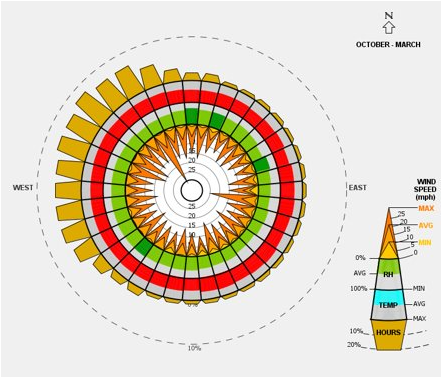
Summer Wind Chart
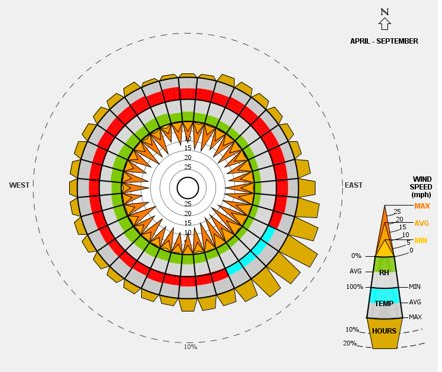
Winter Wind Chart
The Region of Looma is classified as a hot grassland with winter droughts. The region can be generalized as Tropical grasslands: that stay warm throughout the entire year but will experience extreme wet or dry climate conditions during the peaks of each season. Winter and Summer conditions stay between 75°-100°F during daylight hours. A key element within overall passive strategies will be the maximization of the winds from the Northwest and Southeast as shown in the Wind Charts above.
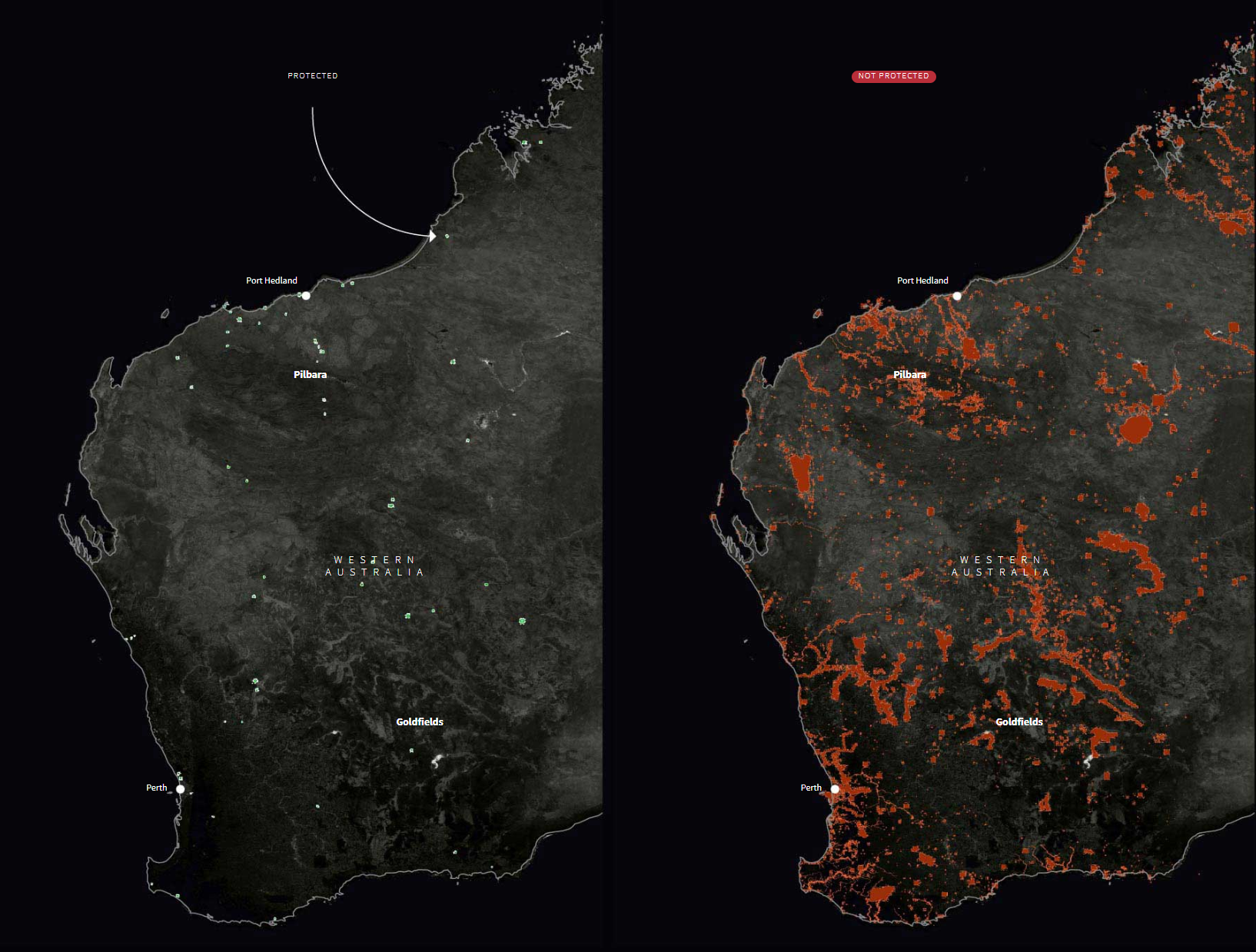
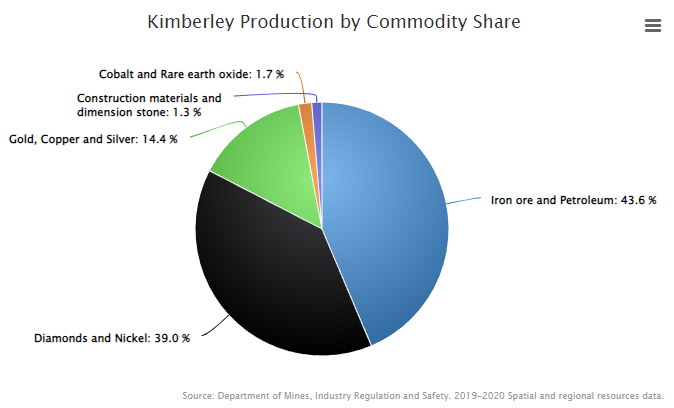
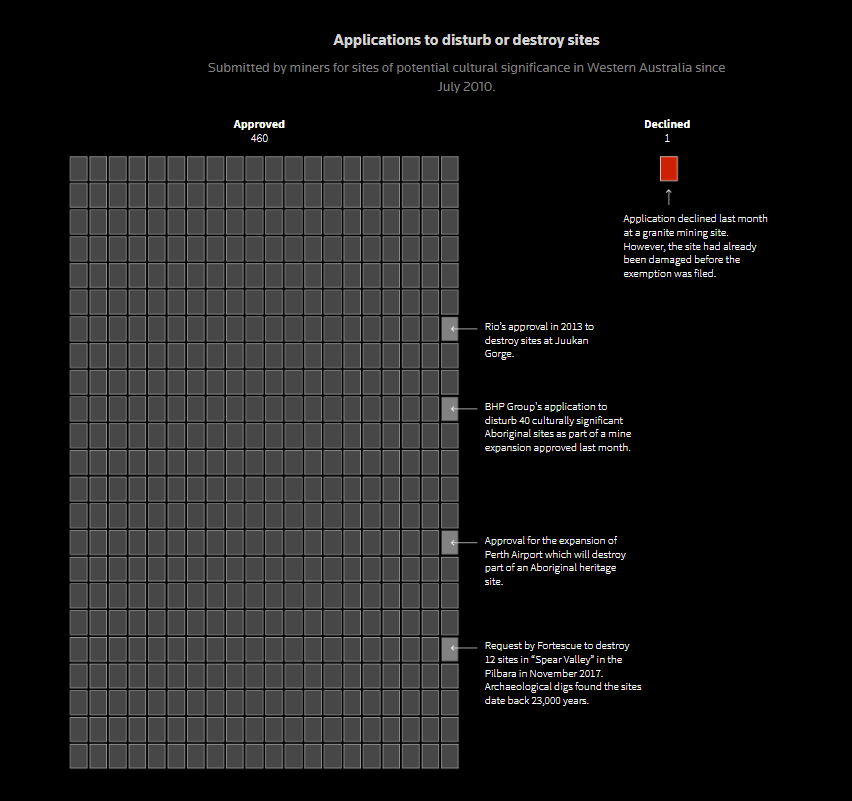
There are a lot of ongoing political tensions within Western Australia which are often related to mining and land rights. The graphs above reflect the aggressive nature that mining companies use to gain valuable land, regardless of the existing aboriginal landowners and the cultural importance of the lands to aboriginal people.
Project Development
With such a complex cultural entanglement that land disputes and native title have created, the identity of the design is formed by Looma, for Looma. With the Judicial nature of the Looma Land Court, making life-altering decisions on land ownership disputes, the involvement of the community ownership and involvement of the Looma Aboriginal community is crucial in establishing the flexibility of the Court/ Community Space. One of the most representative things in the Aborignal Community is art, often represented as a perforated panel which is a common precedent for modern Aborignal projects in Australia today. Projects such as the Wanarn Clinic, Tropical Arts Centre, and Western Desert Clinic, all done by Kaunitz Yeung Architecture are great examples of modern decorative perforated panels that create community engagement as well as functionally a sun shade device.
Dot Painting


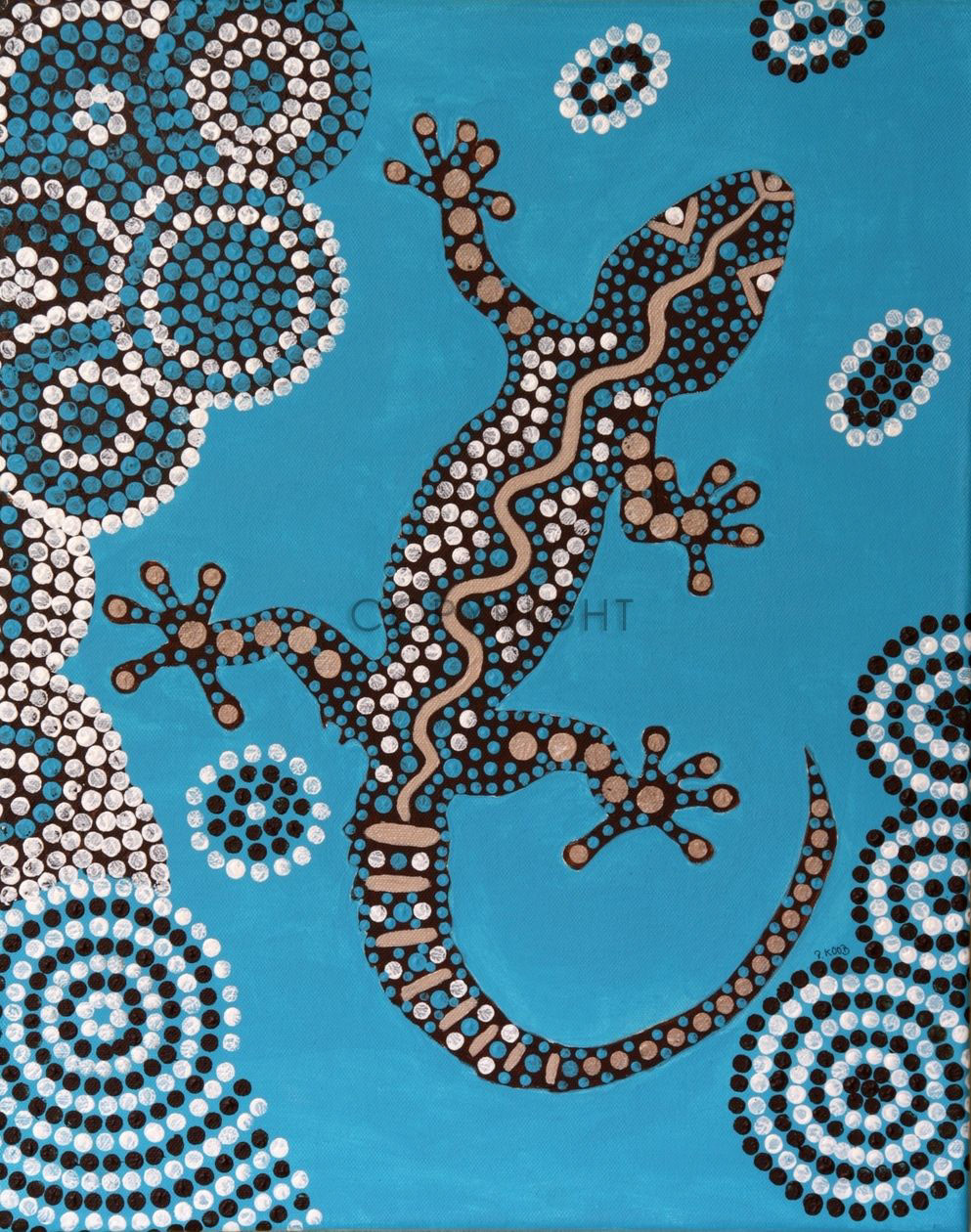



Dot painting is made from stippling techniques and is easily transformed into perforated panels. hiring local Aboriginal artists to create a dot painting for the community aspect of the building offers more ownership and representation to the local Looma community which is 97% Aboriginal status. Creating community through local art is crucial to the success of the building as a community space.
Context and Site Plan
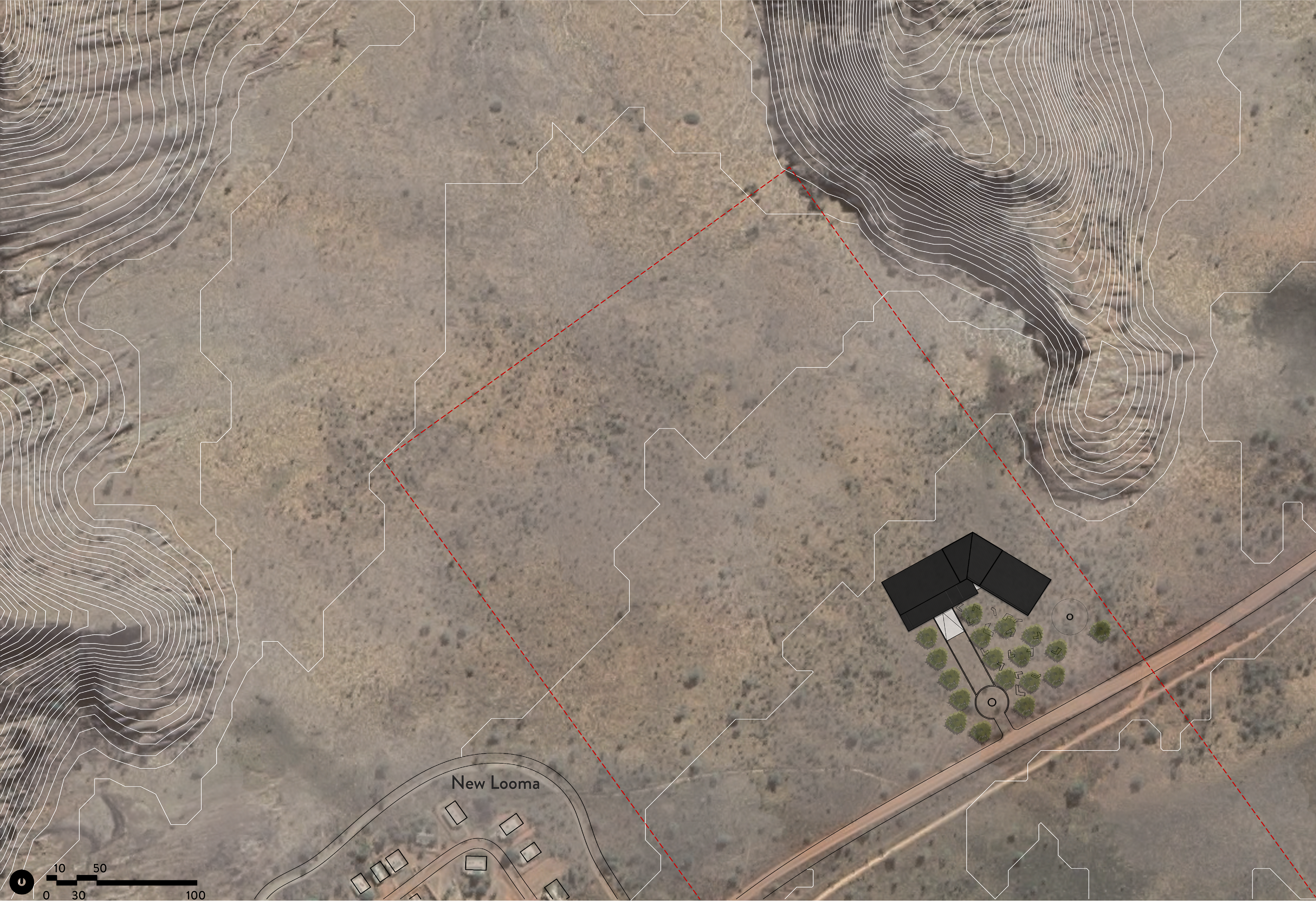
Context Plan of Surrounding Landscape
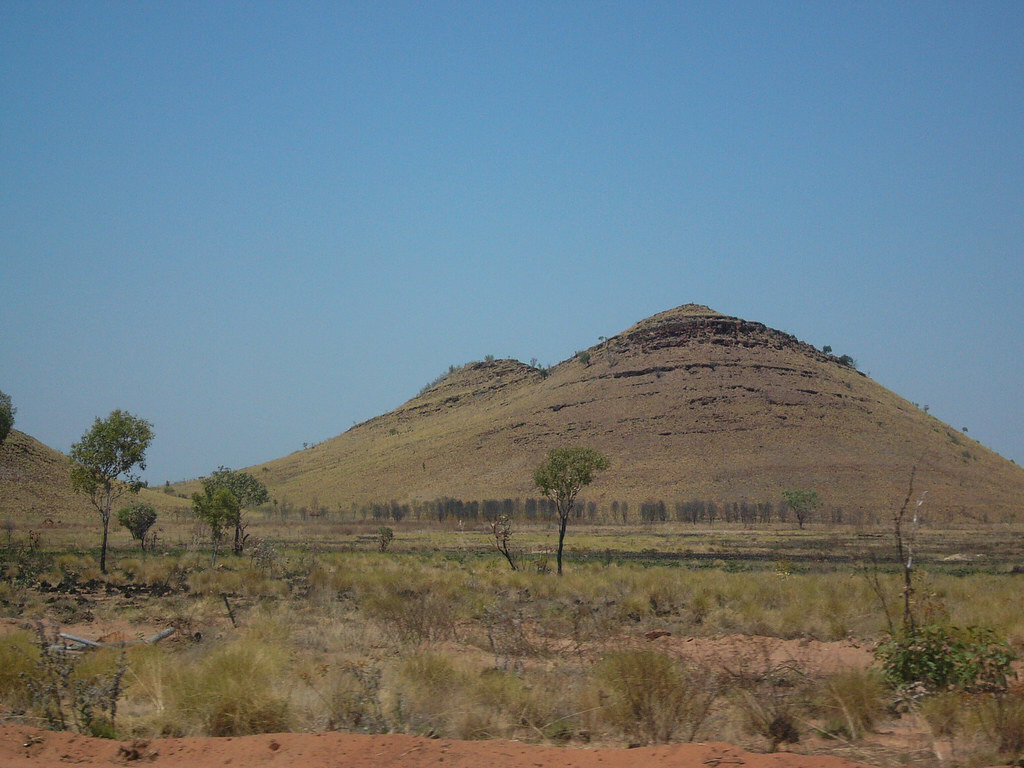
Site Context
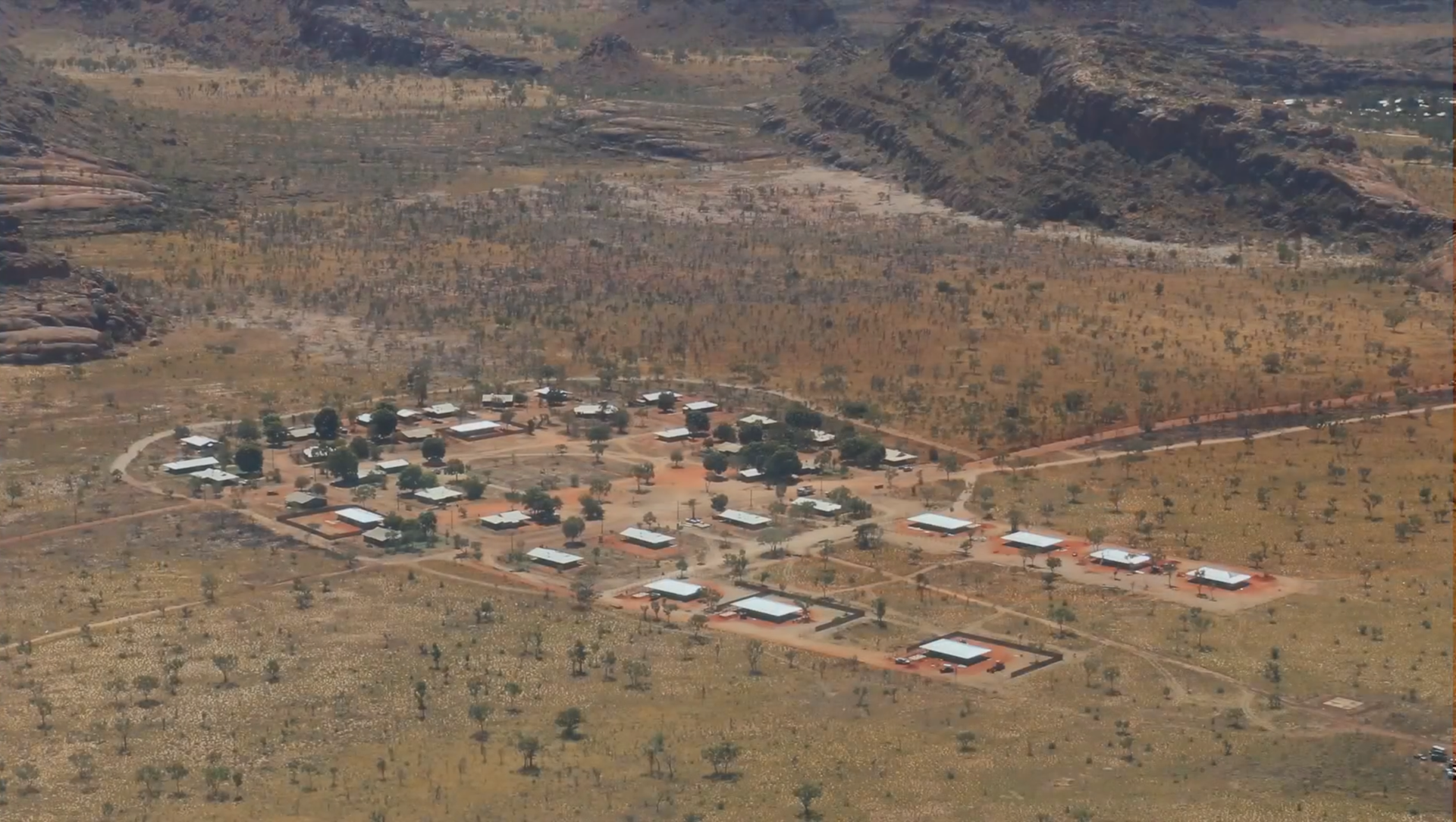
New Looma
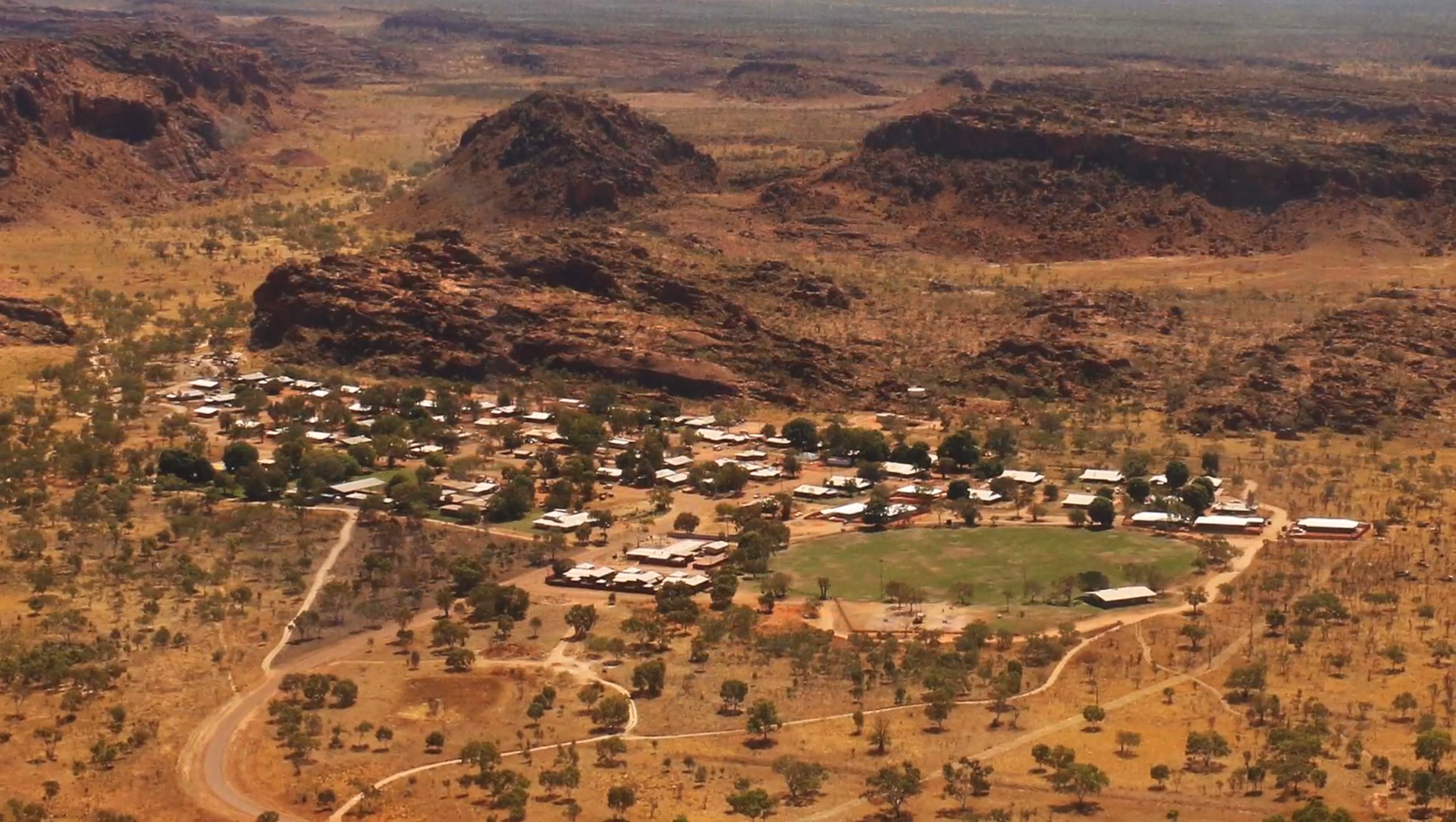
Looma
New Looma & Looma
Site Context
Site Context
Site Context
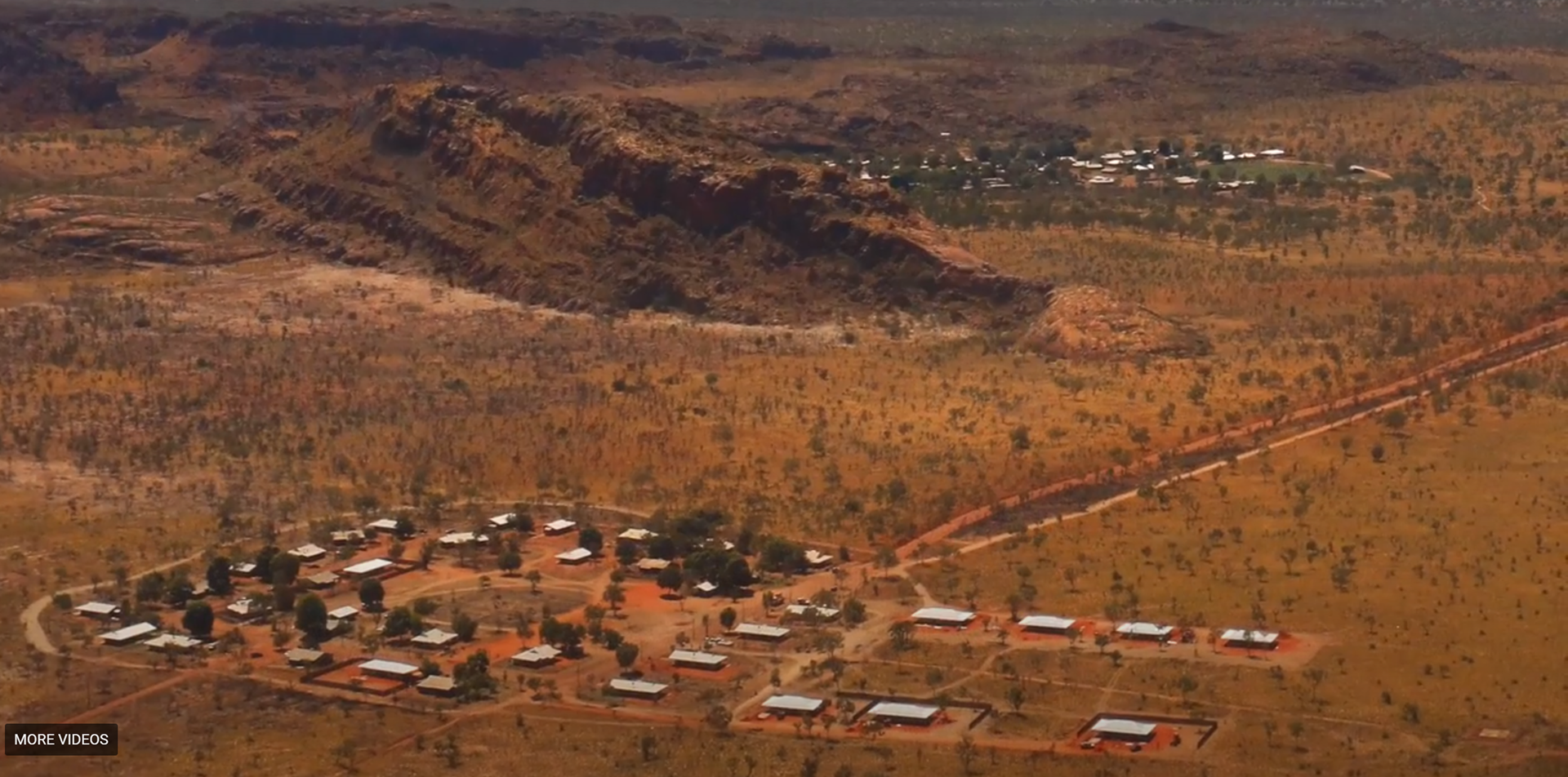
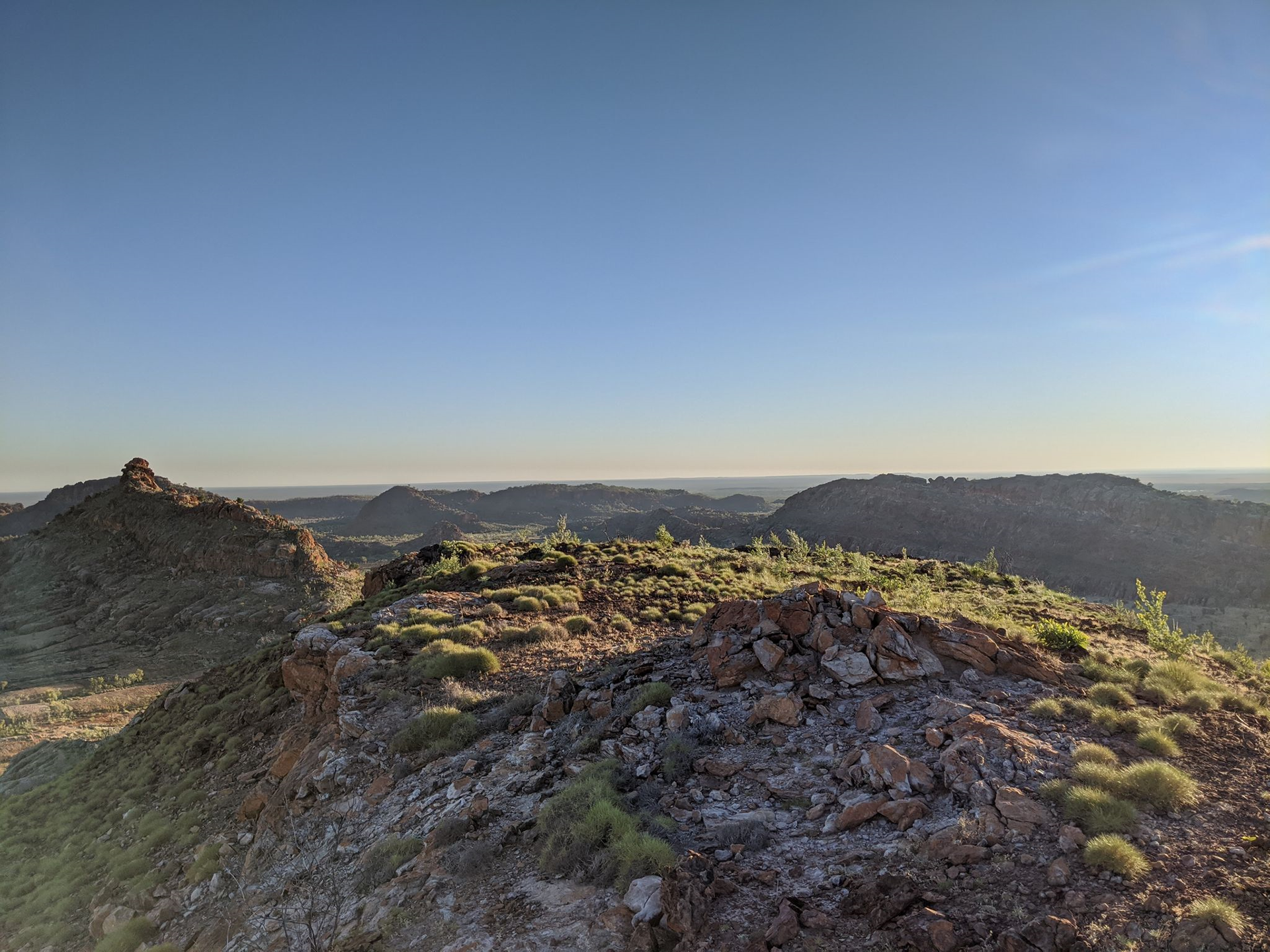
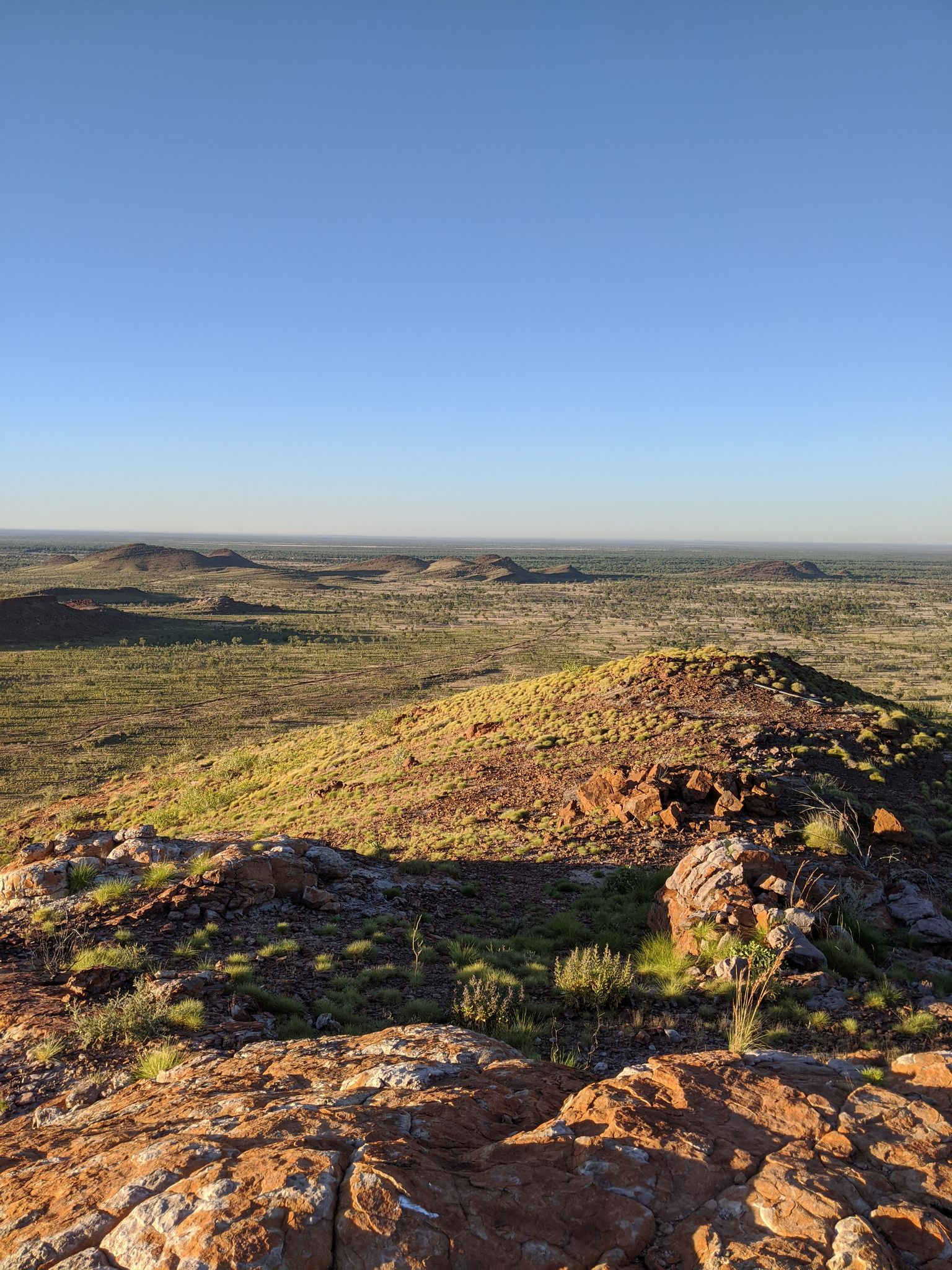
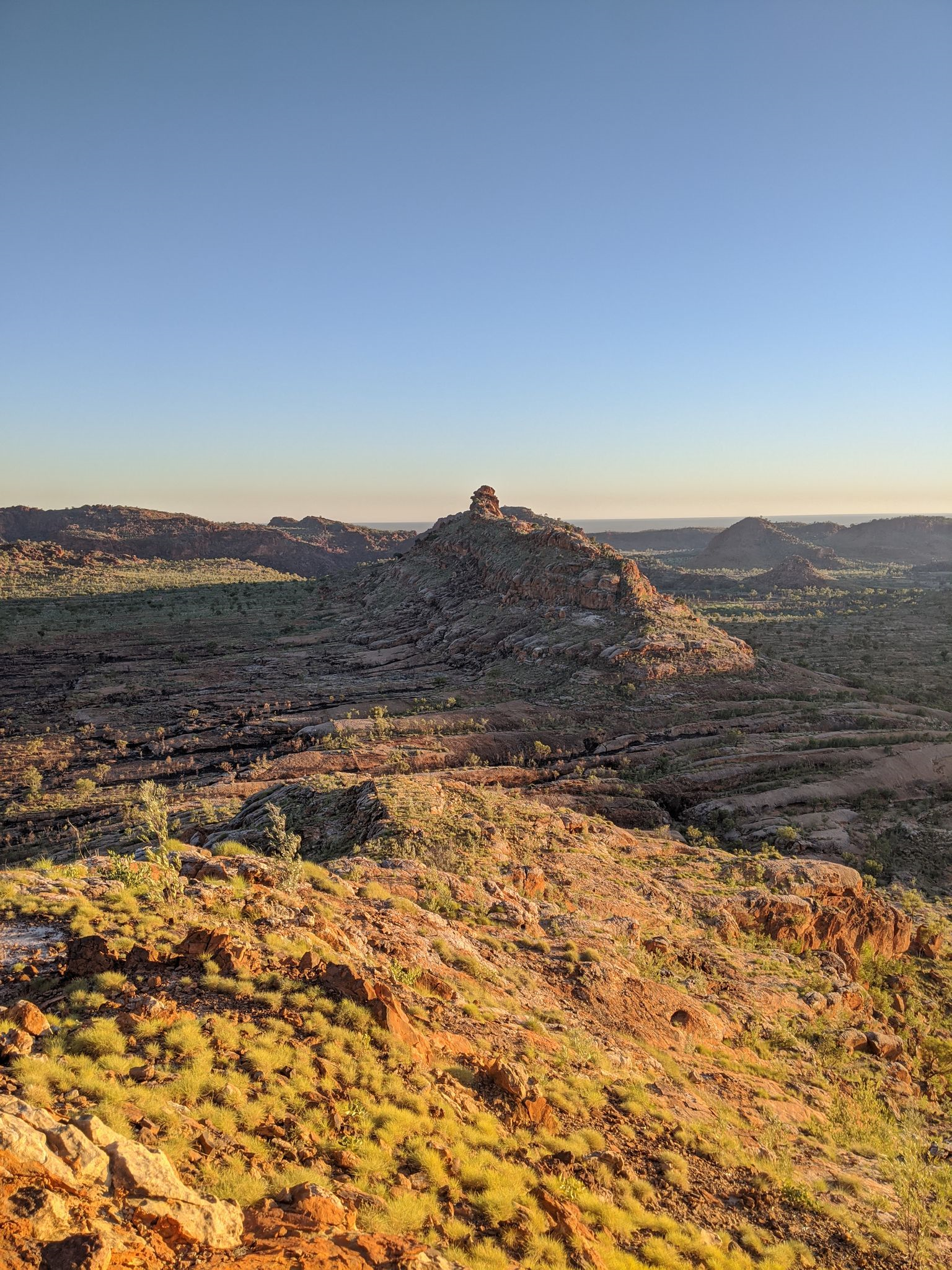
While the reason for the division of Looma and New Looma is not fully known, the site offers a unique opportunity to unify the parts of the town overall, not directly favoring one town over the other. Sandwiched between beautiful rocky bluffs while surrounding the site, tucked nicely into the flatter part of the offers great views, and easy access to the building.
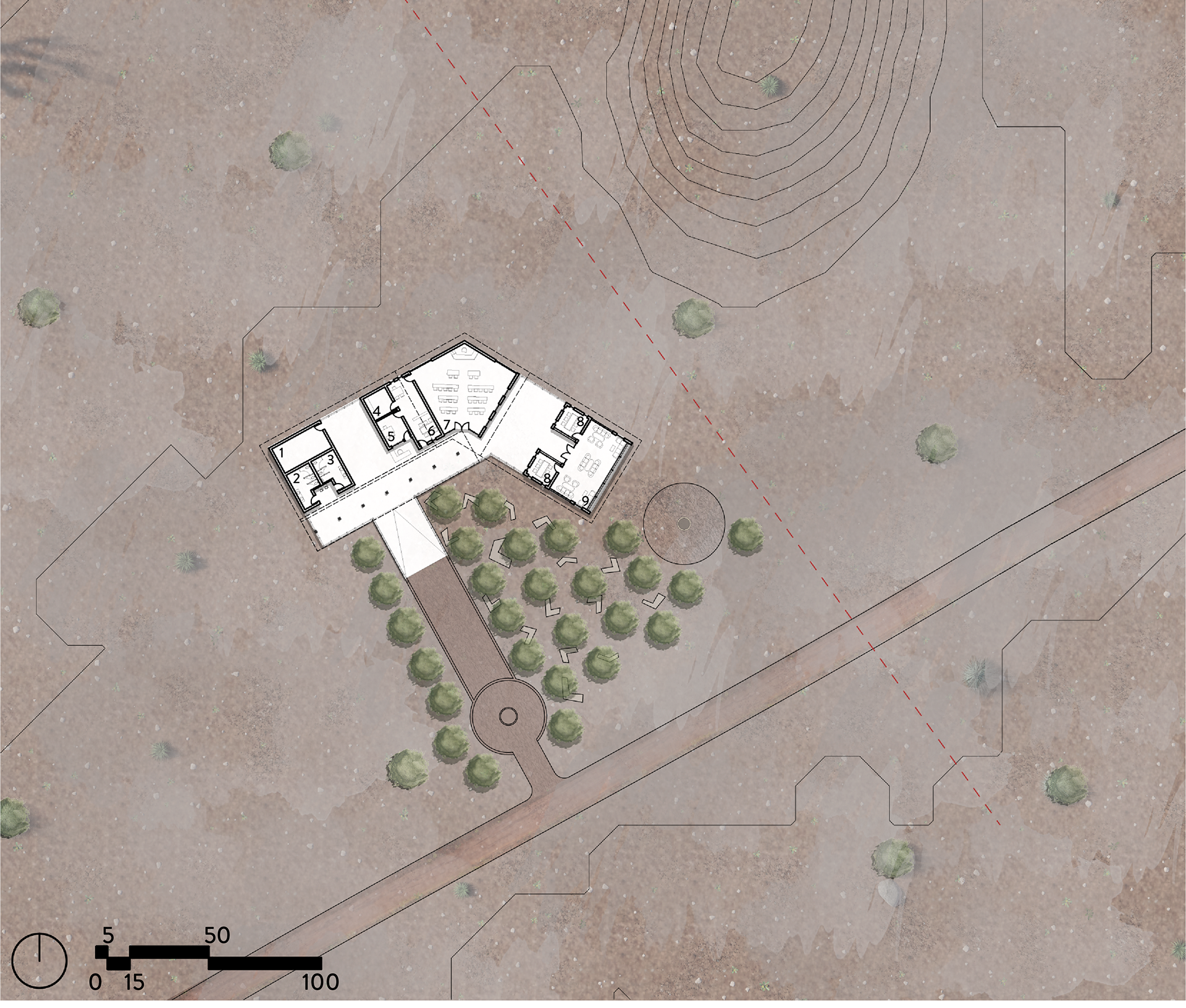
Key
1. Mechanical & Electrical Room
2. Women’s Restroom
3. Men’s Restroom
4. Storage & Archive
5. Receptionist’s Office
6. Magistrate’s Office
7. Courtroom
8. Meeting Rooms
9. Library
2. Women’s Restroom
3. Men’s Restroom
4. Storage & Archive
5. Receptionist’s Office
6. Magistrate’s Office
7. Courtroom
8. Meeting Rooms
9. Library
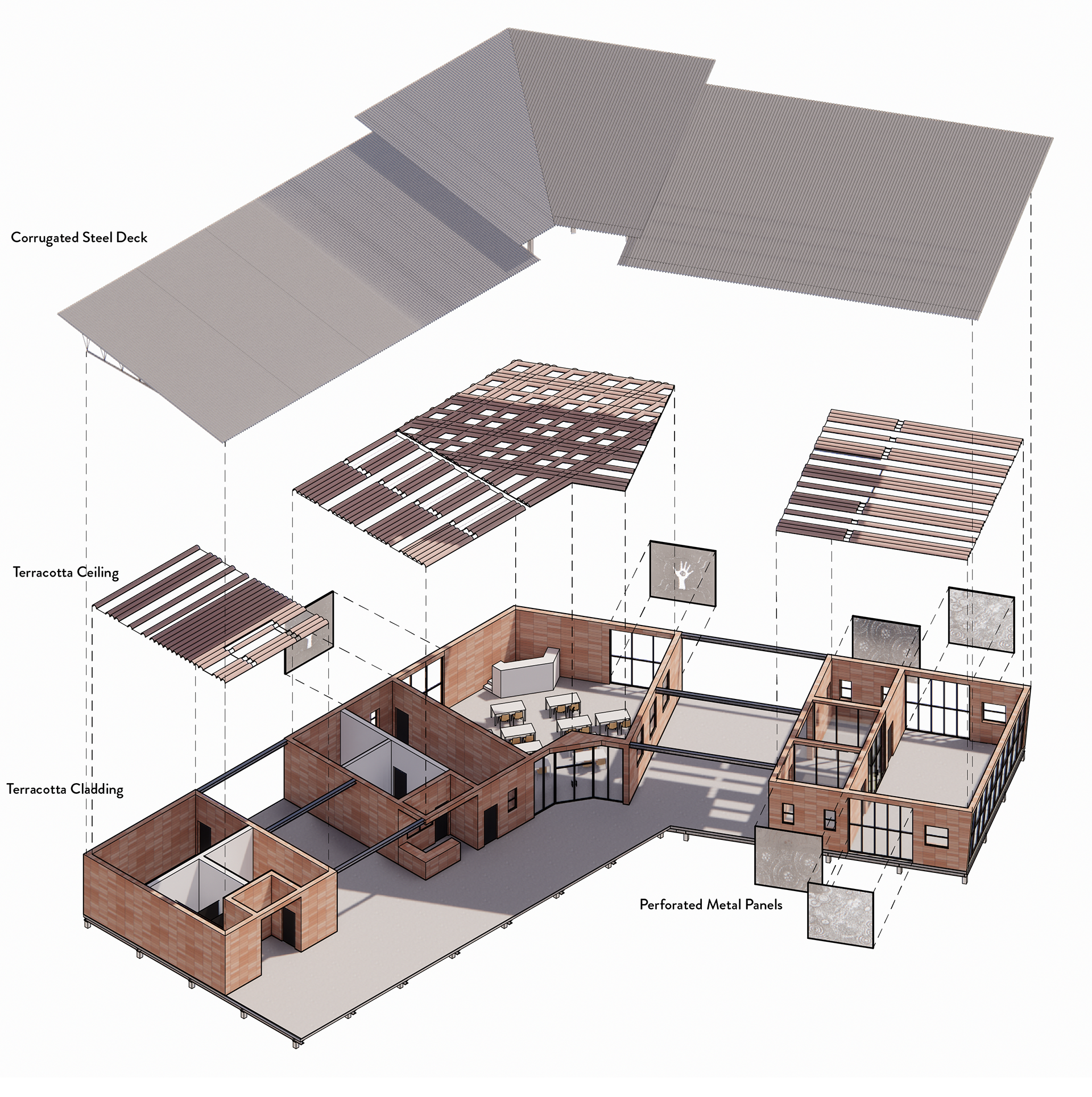
Exploded Axon of Structure and Enclosure
Section Perspective
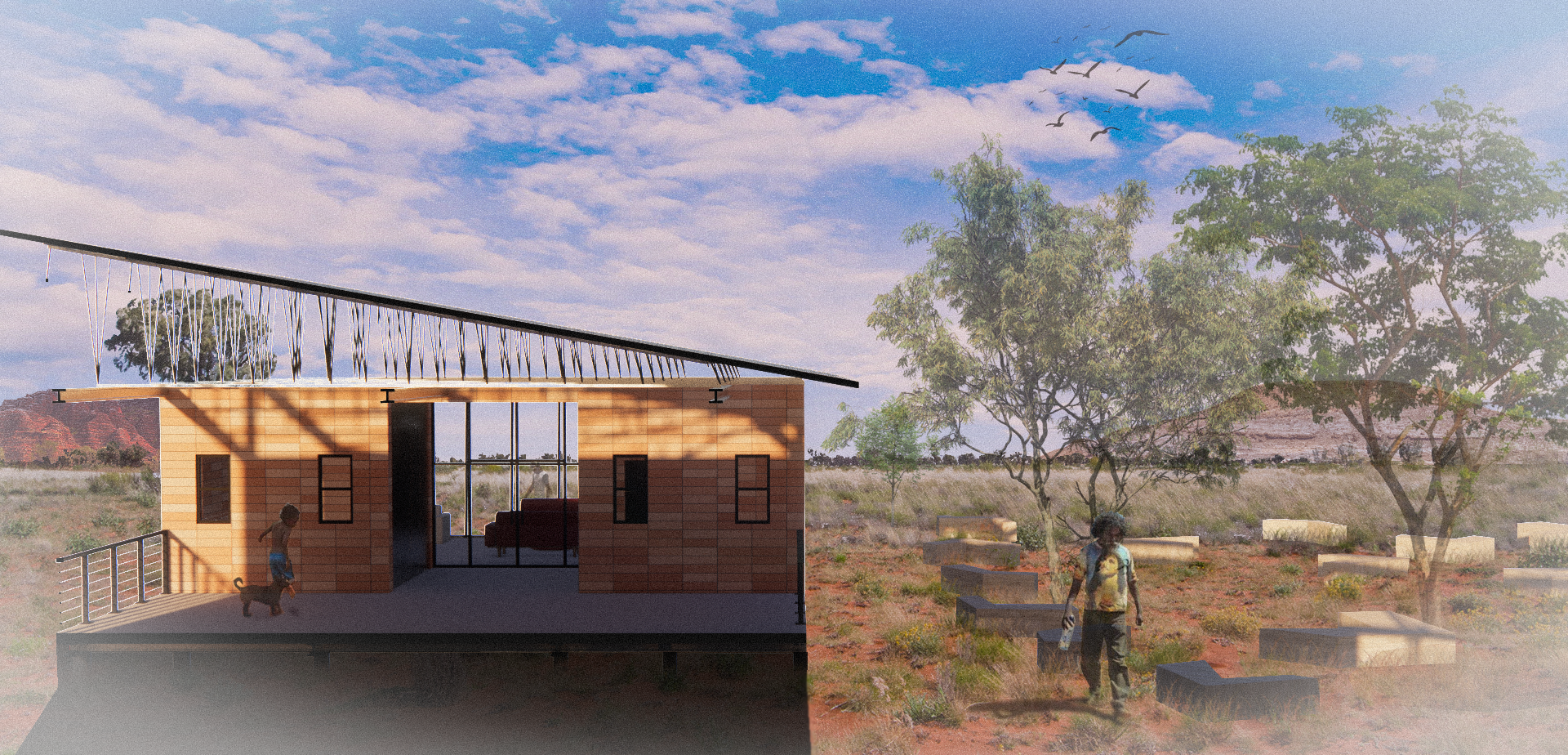
The Section Perspective is crucial in understanding the floor-to-wall, to-ceiling, to-roof connection and overall context of the enclosure. The blurred interior and exterior connection is defined by the axial bend that protects and defines the created exterior courtyard space, building on the community space.
Renderings
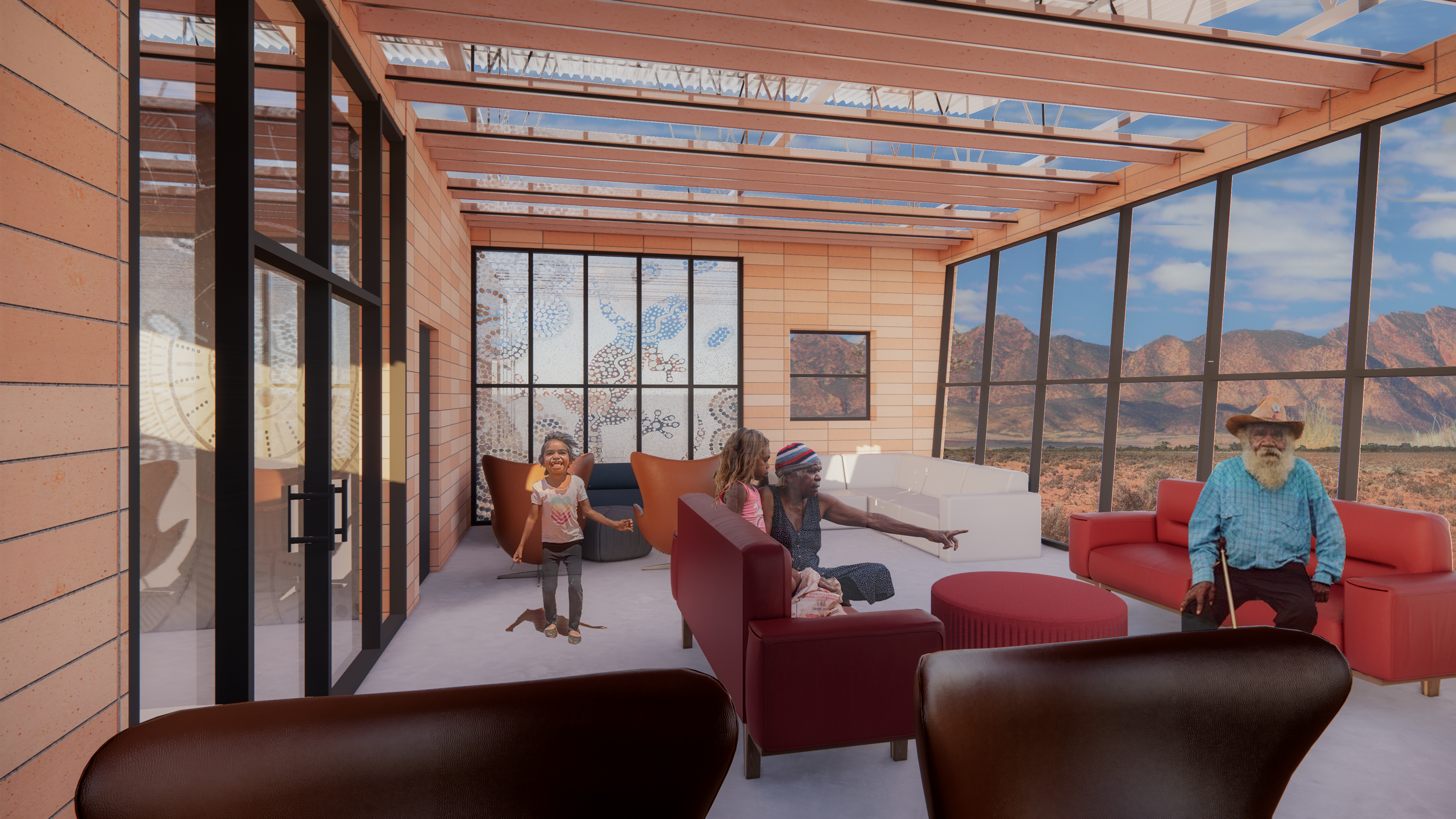
Library Space
The library space is the most important interior space in creating a community connection for the locals of Looma. While the program called for the library to be small and more related to a private archive for the judge and somewhat for the public, the design calls for them to be identified as two different spaces, one private, and one bigger, public space. Instead of a more formal library, the library acts informally as a social space to gather and practice storytelling, art, and other cultural activities. This is even further denoted by the bend and separation from the Court Room activities to show clear belonging to the local people of Looma.
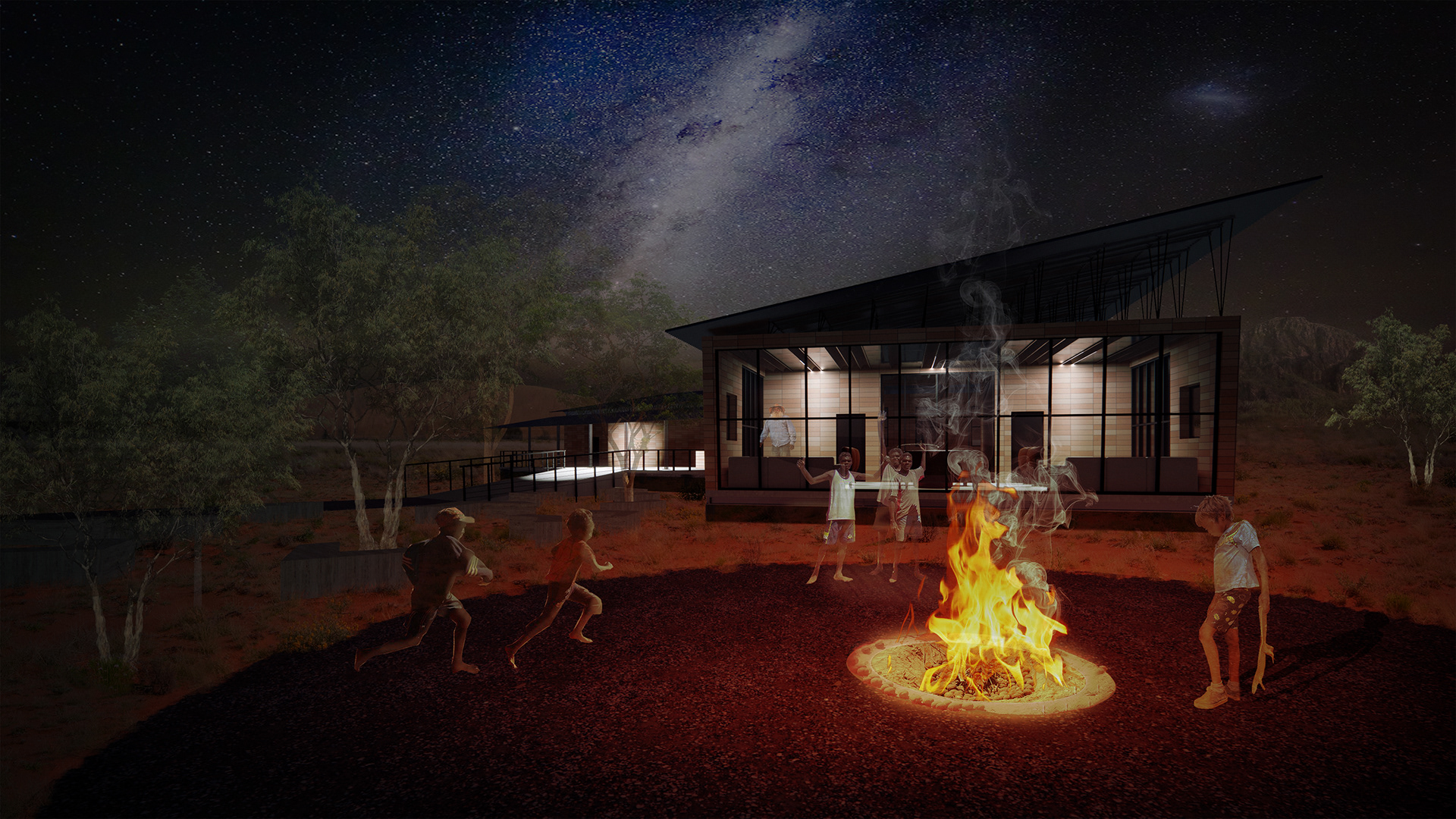
Night Community Activity
Lastly, strengthening and embracing the existing cultural identity of Looma is defined by the pit oven and exterior space for any gatherings or events. One unique thing about the lack of urban density in the Kimberley has created a market for astrotourism, or stargazing. The lack of light pollution creates beautiful and bright night skies full of stars and creates an experience that is uniquely Looma.